Summarize with AI





Tether (USDT) is a stablecoin pegged 1:1 to the US dollar. Its purpose is to hold that value, not to grow to $2, $5, or $10. Searching for a “Tether price prediction” requires a different framework than searching for Bitcoin or Ethereum forecasts. This analysis does not offer price targets for appreciation. It evaluates peg stability mechanisms, reserve health, regulatory exposure, and the conditions that could cause USDT to deviate from $1.00 briefly or materially between 2026 and 2031.
As of April 2026, USDT carries a market capitalization of approximately $184 billion, according to CoinMarketCap. It is the largest stablecoin by supply and the most widely used trading pair across centralized and decentralized exchanges globally. Understanding what that position means and what threatens it is the actual subject of any honest Tether “prediction.”
Key takeaways: understanding Tether stability (not price growth)
Tether is not expected to increase in price. That is by design.
Four points frame everything that follows:
Key takeaway 1: Tether’s purpose. USDT is designed to maintain a $1.00 peg to the US dollar, not appreciate to $2, $5, or $10. Success, for Tether, means staying at $1.00. If you are searching for price appreciation, Bitcoin and Ethereum are the relevant assets. Tether is not.
Key takeaway 2: How the $1 peg works. Tether backs every USDT in circulation with reserve assets: primarily US Treasury bills, cash equivalents, reverse repurchase agreements, and smaller allocations to gold, Bitcoin, and secured loans. According to Tether’s Q4 2025 attestation, prepared by BDO, reserves totaled approximately $193 billion against $186.7 billion in liabilities, an excess buffer of $6.3 billion. For qualified holders (minimum $100,000), USDT is directly redeemable for USD, which anchors the peg through arbitrage.
Key takeaway 3: “Prediction” means stability assessment. The 2026-2031 analysis in this article covers: Will the peg remain stable? What could cause deviations, and how severe? Are reserves adequate? How will regulation affect operations? It does not contain price targets above $1.00.
Key takeaway 4: What actually matters. Holders of USDT should monitor quarterly attestation reports, regulatory developments in the US and EU, reserve composition shifts, redemption functionality, and competition from USDC and potential central bank digital currencies (CBDCs). These factors determine stability confidence. Price charts do not.
Understanding Tether as a stablecoin: why traditional price predictions don’t apply
Tether (USDT) is a stablecoin, a category of cryptocurrency designed to hold a stable value by pegging to an external reference, in this case the US dollar. This purpose places Tether in a fundamentally different category from Bitcoin (BTC) or Ethereum (ETH), which carry no peg and fluctuate based on supply, demand, and speculative flows.
| Factor | Bitcoin / Ethereum | Tether (USDT) |
|---|---|---|
| Purpose | Store of value, programmable money, speculation | Price stability, trading pair, capital preservation |
| Expected price behaviour | High volatility, long-term appreciation thesis | Near-constant at $1.00 |
| Investment goal | Capital growth | Avoiding volatility |
| Risk profile | High 50-80% drawdowns common | Low on price; risks are structural (reserves, regulation) |
| Success metric | Price reaching higher levels | Maintaining $1.00 with minimal deviation |
Bitcoin fell approximately 75% from its November 2021 peak to its 2022 trough. During the same period, USDT’s most significant deviation was a brief dip to approximately $0.95 during the May 2022 Terra/Luna collapse, a deviation that recovered within 48 hours. That contrast is the stablecoin value proposition.
Traders hold USDT for specific purposes: as a neutral base currency for crypto-to-crypto trades, as a temporary safe harbor during market downturns, for cross-exchange transfers that preserve value, for DeFi lending and liquidity pool participation, and as a dollar equivalent in regions where banking access is limited. None of these use cases require USDT reaching $2. They require USDT to stay at $1.
Reserve Assets back the $1.00 peg. For every USDT issued, Tether holds equivalent value in its reserves, primarily US Treasury bills. This mechanism distinguishes fiat-backed stablecoins like USDT from algorithmic models such as the now-collapsed Terra (UST), which attempted to maintain a peg through tokenomics rather than collateral.
The mechanics behind Tether’s $1 peg
Tether’s $1.00 peg operates through three interlocking mechanisms: reserve backing, direct redemption, and exchange-level arbitrage.
Reserve backing is the foundation. Tether holds assets equal to or exceeding the total USDT in circulation. According to the Q3 2025 attestation by BDO, reserves totaled $181.2 billion against $174.4 billion in liabilities a surplus of $6.8 billion.
| Asset class | Approximate value | Share of reserves |
|---|---|---|
| US Treasury bills (direct + indirect) | $135 billion | ~75% |
| Reverse repurchase agreements | ~$21 billion | ~12% |
| Secured loans | ~$14.6 billion | ~8% |
| Gold | ~$12.9 billion | ~7% |
| Bitcoin | ~$9.9 billion | ~5% |
| Other (corporate bonds, money market) | ~$4-6 billion | ~3% |
The shift toward Treasuries has been significant. Tether held approximately $97.6 billion in Treasuries in mid-2024; that figure reached $135 billion by Q3 2025 a 38% increase in twelve months, according to Tether’s official attestation releases. This shift replaced earlier commercial paper holdings, which once comprised 40-50% of reserves before being eliminated by late 2022.
Direct redemption
Direct redemption is available to qualified holders with a minimum threshold of $100,000. These holders can exchange USDT for USD directly with Tether. This mechanism connects the secondary market price to the underlying reserve value.
Arbitrage and peg correction
Arbitrage is the market’s corrective force. When USDT trades above $1.00 on exchanges, arbitrageurs redeem USDT directly with Tether, profiting from the spread and driving price back down. When USDT trades below $1.00, arbitrageurs buy USDT cheaply on exchanges and redeem at $1.00 with Tether, again restoring the peg. This mechanism operates in minutes on liquid markets.
Tether is affiliated with iFinex Inc., which also owns the Bitfinex exchange (Bitfinex: cryptocurrency exchange affiliated with Tether through their shared parent iFinex Inc.). This relationship has drawn regulatory scrutiny over management structure and historical reserve practices. It has not, to date, disrupted the reserve backing that maintains the peg. The redemption mechanism depends on Tether maintaining functional banking relationships a dependency that the Bitfinex affiliation makes relevant to monitor.
Temporary deviations occur when redemption demand spikes faster than arbitrage can equilibrate, or when market panic reduces confidence in reserves. Historical deviations have typically recovered within hours to days.
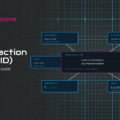
Issuance & Redemption Process
Historical analysis: Tether’s peg maintenance track record
Tether launched in October 2014 as Realcoin, rebranding shortly after. In the eleven years since, USDT’s market capitalization has grown from a few million dollars to over $180 billion. That growth reflects accumulated trust trust that the peg holds even under severe stress.
Major deviation events
| Event | Date | USDT low | Duration | Recovery |
|---|---|---|---|---|
| Reserve opacity concerns | Oct 2018 | ~$0.85 | Several days | Full recovery |
| COVID-19 crash | Mar 2020 | ~$0.97 (spike to ~$1.05) | 24-48 hours | Full recovery |
| Terra/Luna collapse | May 2022 | ~$0.95 | 24-48 hours | Full recovery |
| FTX collapse | Nov 2022 | ~$0.98 | Hours | Full recovery |
| SVB banking crisis | Mar 2023 | ~$0.98 | ~48 hours | Full recovery |
2022-2025 detailed performance
2022 brought two major stress tests. The May Terra/Luna collapse temporarily dragged USDT to approximately $0.95, with $7 billion in redemptions processed reserves held. The November FTX collapse caused a brief dip to approximately $0.98. Both recovered within 24-48 hours.
2023 included the March US banking crisis. Silicon Valley Bank's collapse rattled confidence in USD-denominated reserve assets. USDT dipped to approximately $0.98 and recovered within 48 hours. For the rest of 2023, USDT held within a $0.999-$1.001 range.
2024 was broadly stable, with USDT trading in a $0.999-$1.001 range for most of the year. Tether improved reserve composition significantly, increasing Treasury holdings from approximately $72 billion in early 2024 to approximately $97 billion by mid-2024.
2025 saw continued stability alongside significant reserve growth. Tether issued over $17 billion in new USDT in Q3 2025 alone, bringing supply to over $174 billion by September. Treasury exposure reached an all-time high of $135 billion. For most of 2025, USDT traded within a $0.998-$1.002 range, with no material deviations exceeding 0.5%.
| Month | High | Low | Average | Max deviation % | Key events |
|---|---|---|---|---|---|
| Jan 2025 | $1.001 | $0.998 | $0.9995 | 0.2% | Stable |
| Feb 2025 | $1.001 | $0.999 | $1.000 | 0.1% | Stable |
| Mar 2025 | $1.002 | $0.998 | $1.000 | 0.2% | Market volatility |
| Apr 2025 | $1.001 | $0.999 | $1.000 | 0.1% | Stable |
| May 2025 | $1.001 | $0.998 | $0.9995 | 0.2% | Stable |
| Jun 2025 | $1.001 | $0.999 | $1.000 | 0.1% | Q2 attestation released |
| Jul 2025 | $1.001 | $0.998 | $0.9995 | 0.2% | Stable |
| Aug 2025 | $1.001 | $0.999 | $1.000 | 0.1% | Stable |
| Sep 2025 | $1.001 | $0.998 | $1.000 | 0.2% | Q3 attestation released; $135B Treasuries milestone |
| Oct 2025 | $1.001 | $0.999 | $1.000 | 0.1% | Stable |
| Nov 2025 | $1.001 | $0.998 | $0.9995 | 0.2% | Stable |
| Dec 2025 | $1.001 | $0.999 | $1.000 | 0.1% | MiCA delistings begin in EU |
Current Tether market analysis (2026)
Tether enters 2026 as the dominant stablecoin by a substantial margin. Key metrics as of March 2026:
| Metric | Value (March 2026) |
|---|---|
| Market capitalization | ~$184 billion (CoinMarketCap, March 2026) |
| Stablecoin market share | ~60.7% of total stablecoin market cap (CoinMarketCap, April 2026) |
| 24-hour trading volume | ~$83.6 billion (CoinMarketCap) |
| Native blockchain networks | 10 major chains (Ethereum, Tron, Solana, Avalanche, Polygon, others) |
| Global users | 500 million+ (Tether Q3 2025 attestation) |
| Excess reserves | $6.8 billion (BDO Q3 2025 attestation) |
The stablecoin market has grown to approximately $316-317 billion in total capitalization as of early 2026, with USDT and USDC together controlling approximately 93% of that market, according to CoinLaw. USDC, issued by Circle, reached approximately $75.7 billion in supply as of April 2026, up from $75.3 billion in February benefiting from EU MiCA compliance and strong institutional adoption.
Tether's reserve structure as of Q3 2025 positions it as the 17th largest holder of US Treasury bonds globally ahead of South Korea and Germany, according to the Q3 2025 BDO attestation. The $6.8 billion excess reserve buffer provides a meaningful cushion against short-term redemption pressure.
| Blockchain | Share of total USDT supply |
|---|---|
| Tron (TRC-20) | 49% |
| Ethereum (ERC-20) | 34% |
| Solana | 7% |
| TON | 5% |
| Other chains | 5% |
Tether "price prediction" 2026: stability outlook
Predicting USDT's price for 2026 means predicting whether it will remain at $1.00, not whether it will rise above it.
| Month | Expected range | Confidence | Key risk factors |
|---|---|---|---|
| January | $0.998-$1.002 | 93% | Post-December MiCA delistings adjustment |
| February | $0.998-$1.002 | 92% | Market conditions, USDC competition |
| March | $0.998-$1.002 | 92% | US GENIUS Act developments |
| April | $0.998-$1.002 | 91% | Q1 2026 attestation release (expected) |
| May | $0.997-$1.003 | 90% | Crypto market volatility risk (historically active) |
| June | $0.998-$1.002 | 91% | Mid-year regulatory review period |
| July | $0.997-$1.003 | 89% | MiCA full enforcement deadline (July 1, 2026) |
| August | $0.998-$1.002 | 91% | Post-MiCA market adjustment |
| September | $0.998-$1.002 | 91% | Q2 2026 attestation release (expected) |
| October | $0.998-$1.002 | 91% | Q3 2026 preview; crypto market autumn dynamics |
| November | $0.997-$1.003 | 90% | Year-end liquidity patterns |
| December | $0.998-$1.002 | 91% | Q3 2026 attestation release (expected) |
Scenarios for 2026
| Scenario | Probability | Description |
|---|---|---|
| Base case | 90% | USDT maintains $0.998-$1.002 range. Normal daily deviations of 0.1-0.2%. Brief spikes or dips to $1.005 or $0.995 during high-volatility periods. Rapid recovery within hours. |
| Stress case | 8% | Brief deviation to $0.95-$0.98 or $1.02-$1.05. Likely triggers: major crypto exchange collapse, unexpected regulatory enforcement, banking sector stress affecting reserve custodians, or surge in redemption requests. Recovery within 24-72 hours based on historical precedent. |
| Crisis case | 2% | Deviation below $0.90 or above $1.10. Would require simultaneous reserve inadequacy concerns, regulatory prohibition on redemptions, and systemic crypto market collapse. No such scenario has materialized in eleven years of Tether's operation. |
July 2026 carries specific attention: this is when MiCA's final enforcement deadline applies to all EU crypto asset service providers. If Tether does not obtain compliance, additional European delistings could follow. The impact on the global peg would likely be limited approximately 80% of USDT volume originates in Asia but European market share reduction could continue.
Tether outlook 2027-2030: long-term stability assessment
Long-term stablecoin outlooks carry more uncertainty than 12-month assessments. The peg mechanism itself is simple and proven. The variables are regulatory, competitive, and macroeconomic. These tables predict stability maintenance, not price growth.
| Year | Expected range | Confidence | Key risks |
|---|---|---|---|
| 2027 | $0.998-$1.002 | ~88% | US regulatory framework clarity; USDC competition intensifying; EU MiCA enforcement mature |
| 2028 | $0.998-$1.002 | ~85% | CBDC pilot programmes advancing; more stringent reserve requirements globally |
| 2029 | $0.998-$1.002 | ~80% | 5-year horizon uncertainty; potential CBDC competition in regulated markets |
| 2030 | $0.997-$1.003 | ~75% | CBDC impact fully materializing; Tether market share potentially 40-60% of stablecoin sector |
Monthly breakdown 2027
| Month | Expected range | Confidence | Key factors |
|---|---|---|---|
| January | $0.998-$1.002 | 89% | Post-2026 regulatory landscape established |
| February | $0.998-$1.002 | 89% | Stable, USDC competition baseline |
| March | $0.998-$1.002 | 88% | US stablecoin framework developments |
| April | $0.998-$1.002 | 88% | Q1 2027 attestation release |
| May | $0.997-$1.003 | 87% | Crypto market seasonal volatility |
| June | $0.998-$1.002 | 88% | Mid-year regulatory review |
| July | $0.998-$1.002 | 88% | MiCA full-enforcement environment stable |
| August | $0.998-$1.002 | 88% | Stable |
| September | $0.998-$1.002 | 88% | Q2 2027 attestation; reserve transparency standards |
| October | $0.998-$1.002 | 88% | Stable, end-of-year institutional flows begin |
| November | $0.997-$1.003 | 87% | Year-end liquidity patterns |
| December | $0.998-$1.002 | 88% | Q3 2027 attestation release |
Breakdown by months 2028
| Month | Expected range | Confidence | Key factors |
|---|---|---|---|
| January | $0.998-$1.002 | 86% | Four years of continued peg maintenance; confidence building |
| February | $0.998-$1.002 | 86% | CBDC announcements potentially increasing |
| March | $0.998-$1.002 | 85% | US regulatory framework mature; reserve requirements stringent |
| April | $0.998-$1.002 | 85% | Q1 2028 attestation release |
| May | $0.997-$1.003 | 84% | Crypto market volatility risk |
| June | $0.998-$1.002 | 85% | Mid-year review |
| July | $0.998-$1.002 | 85% | CBDC adoption status becoming clearer |
| August | $0.998-$1.002 | 85% | Stable |
| September | $0.998-$1.002 | 85% | Q2 2028 attestation; multi-year track record reinforced |
| October | $0.998-$1.002 | 85% | Stable |
| November | $0.997-$1.003 | 84% | Year-end patterns |
| December | $0.998-$1.002 | 85% | Q3 2028 attestation |
Monthly breakdown 2029
| Month | Expected range | Confidence | Key factors |
|---|---|---|---|
| January | $0.998-$1.002 | 81% | Five-year horizon; increasing uncertainty |
| February | $0.998-$1.002 | 81% | CBDC adoption trajectory clearer |
| March | $0.998-$1.002 | 80% | Stablecoin landscape potentially materially different |
| April | $0.998-$1.002 | 80% | Q1 2029 attestation release |
| May | $0.997-$1.003 | 79% | Market volatility risk elevated at 5-year horizon |
| June | $0.998-$1.002 | 80% | Regulatory environment assessment |
| July | $0.998-$1.002 | 80% | Technology improvements to redemption mechanisms |
| August | $0.998-$1.002 | 80% | Stable |
| September | $0.998-$1.002 | 80% | Q2 2029 attestation |
| October | $0.998-$1.002 | 80% | Stable |
| November | $0.997-$1.003 | 79% | Year-end patterns |
| December | $0.998-$1.002 | 80% | Q3 2029 attestation |
2030 Breakdown
| Month | Expected range | Confidence | Key factors |
|---|---|---|---|
| January | $0.997-$1.003 | 76% | CBDC impact fully materializing; Tether market share ~40-60% of stablecoin sector |
| February | $0.997-$1.003 | 76% | Competitive landscape assessed; dollar peg model viability confirmed or challenged |
| March | $0.997-$1.003 | 75% | Regulatory environment mature in most major jurisdictions |
| April | $0.997-$1.003 | 75% | Q1 2030 attestation; reserve requirements stringent and standardized |
| May | $0.996-$1.004 | 74% | Market volatility risk elevated at 4-year horizon |
| June | $0.997-$1.003 | 75% | Mid-year structural assessment |
| July | $0.997-$1.003 | 75% | Blockchain infrastructure fully mature |
| August | $0.997-$1.003 | 75% | Stable |
| September | $0.997-$1.003 | 75% | Q2 2030 attestation |
| October | $0.997-$1.003 | 75% | Stable |
| November | $0.996-$1.004 | 74% | Year-end liquidity patterns |
| December | $0.997-$1.003 | 75% | Q3 2030 attestation |
Tether "prediction" 2031 and beyond: future of dollar-pegged stablecoins
A five-year horizon in cryptocurrency is multiple technology generations. Tether's continued existence in 2031 is probable but not certain. Its $1.00 peg model, if it exists, will almost certainly still operate on the same core mechanism: reserve backing and redemption arbitrage.
| Scenario | Probability | Description |
|---|---|---|
| Continued peg (primary) | 70% | Tether maintains $1.00 peg in 2031. Market share potentially reduced to 30-50%. Regulatory frameworks mature. Reserve requirements stringent and standardized. Fundamental model unchanged: one USDT, one dollar in reserves. |
| CBDC dominance | 15% | Central bank digital currencies from major economies reduce demand for private stablecoins. Tether adapts to serve markets where CBDCs are not yet available. Global USDT supply contracts but does not collapse. |
| Multi-currency evolution | 10% | Dollar-pegged stablecoins face competition from baskets of currencies. Tether may launch non-USD variants. The $1.00 USDT peg remains but is one option among many. |
| Technology disruption | 5% | Blockchain infrastructure evolves in ways that make current stablecoin mechanisms less efficient. New stability mechanisms emerge. Tether adapts or declines. |
Key questions that will determine the 2031 outcome
- Will the US dollar maintain its status as the global reserve currency? (Affects peg relevance)
- Will regulation enable or constrain Tether's operational model? (Determines viability)
- Will CBDCs and private stablecoins coexist or compete directly? (Market size determination)
- Will blockchain technology fundamentally change? (Infrastructure evolution)
Factors that actually matter for Tether stability (not price growth)
Holders of USDT should track these factors, not price charts.
| Factor | Importance | What to monitor | Red flags | Current status |
|---|---|---|---|---|
| Reserve Assets | Critical (10/10) | Quarterly attestation reports; reserve composition (prefer high cash/treasury); liquidity ratio; auditor credibility | Composition shifts toward volatile assets; attestation delays; auditor changes; declining excess buffer | Q3 2025: $135B Treasuries (75%), $6.8B excess buffer, quarterly BDO attestations |
| Regulatory environment | Critical (9/10) | US GENIUS Act status; MiCA enforcement; DOJ/CFTC actions; banking relationship stability | Redemption prohibition; banking access loss; major market ban | MiCA non-compliance EU delistings ongoing; US framework under development |
| Redemption mechanism | High (8/10) | Can large holders ($100K+) redeem USDT for USD reliably? Redemption speed and stated minimums; Tether banking partner stability | Redemption suspensions; arbitrary limits; unexplained processing delays; Bitfinex relationship disruption | Functional; minimum $100,000 with account verification required |
| Market liquidity | High (8/10) | 24-hour trading volume trends; exchange availability; multi-chain activity; arbitrage efficiency (speed of return to $1.00 after deviation) | Volume declining; exchange delistings; liquidity fragmentation | ~$91B daily volume; available on 10+ blockchains natively |
| Market sentiment | Medium (7/10) | Major crypto events driving redemption spikes; deviation frequency and recovery speed | Deviation exceeding 3% lasting more than 48 hours | Stable; no material deviation in 2025 |
| Competition | Medium (7/10) | USDC market share growth; CBDC announcements; new stablecoin entrants | USDC surpassing 50% of stablecoin market; major exchange preferring USDC over USDT | USDC: ~$75.7B (Apr 2026); Tether market share: ~60.7% |
Check reserve attestations and regulatory news quarterly. Daily price-watching is unnecessary. If USDT deviates more than 1% from $1.00, market notifications from any major exchange will surface the event immediately.
Reserve transparency and attestation reports explained
Tether publishes quarterly attestation reports, currently prepared by BDO Advisory Services one of the five largest global accounting firms. Understanding what these reports contain, and what they do not, is essential for assessing peg stability.
Attestation vs audit a critical distinction. An attestation is a limited assurance engagement. BDO confirms that the figures Tether provides are consistent with documented records. An audit is a more rigorous, independent examination of financial statements. Tether's reports are attestations, not audits. USDC undergoes monthly attestations and annual audits. This distinction is relevant when assessing the depth of reserve verification.
| Q3 2025 Attestation (BDO, September 30, 2025) | Value |
|---|---|
| Total reserves | $181.2 billion |
| Total liabilities (tokens in circulation) | $174.4 billion |
| Excess reserves | $6.8 billion |
| US Treasury exposure (direct + indirect) | $135 billion (~75% of reserves) |
| Gold | $12.9 billion |
| Bitcoin | $9.9 billion |
| Secured loans | $14.6 billion |
What signals stability in an attestation
- Excess reserves maintained or growing across consecutive quarters
- Treasury and cash allocation remaining dominant (currently ~75%)
- Timely publication (approximately 4-6 weeks after quarter end)
- Consistent auditor (BDO has prepared Tether's attestations since 2021)
- Liabilities not exceeding reserves under any disclosed scenario
What signals concern
- Composition shifting toward secured loans or volatile assets (BTC, gold)
- Attestation delayed without explanation
- Auditor change
- Excess reserve buffer declining over consecutive quarters
- Opacity about specific asset holdings increasing
Tether's transparency has improved materially since 2021, when quarterly attestations began. Transparency remains below USDC's standard Circle publishes monthly attestations and annual audits, while Tether publishes quarterly attestations only. This gap is relevant but does not mean Tether's reserves are inadequate. The Q3 2025 data shows a well-collateralized reserve structure with a meaningful excess buffer.
| Asset | Share of reserves |
|---|---|
| Commercial paper | 65% |
| Cash & deposits | 15% |
| US Treasuries | 5% |
| Money market funds | 10% |
| Other | 5% |
| Asset | Share of reserves |
|---|---|
| US Treasuries | 73% |
| Cash & equivalents | 12% |
| Money market funds | 8% |
| Gold | 3.5% |
| Bitcoin | 2% |
| Other | 1.5% |
Tether's competitors: USDC, DAI, and the stablecoin landscape
| Stablecoin | Issuer | Market cap | Backing | Regulatory status |
|---|---|---|---|---|
| USDT | Tether (iFinex) | ~$184B | Fiat (Treasuries, gold, BTC) | Non-MiCA; US framework developing |
| USDC | Circle | ~$75B | Fiat (Treasuries, cash) | MiCA compliant; US licensed |
| DAI | MakerDAO | ~$5-7B | Crypto-collateralized | Decentralized; different risk profile |
| Others | Various | ~$50B total | Various | Varies |
According to CoinLaw data from January 2026, USDT and USDC together account for approximately 93% of total stablecoin market capitalization.
Tether vs USDC: the primary competitive dynamic
USDC (Circle) has grown aggressively, reaching $75.3 billion by February 2026, a 72% year-over-year increase, according to Spottedcrypto. Circle obtained an electronic money institution license in France, making USDC MiCA compliant across the EU. Circle publishes monthly attestations and annual audits, providing more frequent reserve verification than Tether's quarterly attestations.
Tether maintains advantages in liquidity, exchange availability, and multi-chain presence. USDT is the default trading pair on the majority of global centralized exchanges and represents approximately 70% of global crypto trading volume. USDC is gaining ground in regulated markets and Europe specifically. Both are coexisting rather than one replacing the other though market share is shifting in USDC's favor in regulated jurisdictions.
Terra (UST): the cautionary example
In May 2022, Terra's algorithmic stablecoin UST lost its $1.00 peg and collapsed to near zero within days, destroying approximately $18 billion in market value. Terra's model relied on tokenomics rather than collateral. Four lessons for the stablecoin sector:
- Algorithmic stablecoins without full reserve backing carry extreme collapse risk
- The Terra collapse triggered a 25% increase in regulatory scrutiny globally; new stablecoin legislation was introduced in the US, EU, and Asia in the 12 months following the collapse
- Fiat-backed stablecoins (USDT, USDC) held their pegs through Terra contagion, demonstrating reserve-backed model resilience
- Regulatory attention on all stablecoin models has been elevated since May 2022; this is a permanent change to the operating environment
| Stablecoin | Market share |
|---|---|
| USDT (Tether) | 60.7% |
| USDC (Circle) | 24.1% |
| DAI | 2.0% |
| Others | 13.2% |
Analyzing Tether during market volatility and crashes
USDT's function as a capital preservation instrument within the crypto ecosystem is demonstrable, not theoretical. These events show how the peg behaves when conditions are most severe.
| Event | USDT behavior | Outcome |
|---|---|---|
| March 2020 COVID crash (BTC: -50% in 48h) | Spiked to ~$1.05 due to massive capital flight to stability | Returned to $1.00 within 48 hours. Safe harbor function demonstrated. |
| May 2021 correction (BTC: -50% from $65K peak) | Remained within $0.998-$1.002 range throughout | Smooth capital rotation. No deviation event. |
| May 2022 Terra/Luna collapse (UST: -100%) | Briefly dipped to ~$0.95 due to contagion panic; $7B+ redemptions processed | Recovered to $1.00 within 24-48 hours. Reserves held. Proved fiat-backing superiority over algorithmic models. |
| November 2022 FTX collapse (BTC: -25%) | Briefly reached ~$0.98 | Rapid recovery hours rather than days. Non-custodial structure separated Tether from exchange counterparty risk. |
| March 2023 banking crisis (SVB collapse) | USDT dipped to ~$0.98 (USDC briefly to ~$0.87) | USDT recovered within 48 hours. Reserve structure less concentrated in US regional banks than USDC. |
The pattern across all events: Market Sentiment temporarily affects Tether's peg during extreme stress. Typical deviation range is 1-5%, lasting hours to 48 hours. Recovery has been consistent. Volume spikes during crashes represent the stress test: the peg has passed every test since 2014.
Converting volatile crypto positions to USDT during a bear market preserves capital at $1.00 and enables re-entry at lower prices. The risk is that temporary deviations occur during peak volatility conversion at the exact bottom of a crash may involve a brief discount. This is not a recommendation; it is the functional context in which USDT was designed to operate.
Regulatory environment: the biggest long-term factor for USDT
Regulatory developments represent the largest uncertainty for Tether's long-term operational model. The peg mechanism itself is proven. Regulation is the variable that could constrain or transform how Tether operates.
United States
The US GENIUS Act requiring stablecoin issuers to hold 100% liquid reserves, submit to regular audits, and obtain federal or state licensing was signed into law on July 18, 2025, with a phased compliance rollout beginning April 1, 2026. Tether has been proactive in positioning for compliance: the shift toward $141 billion in US Treasuries directly aligns with the new reserve requirements. They also announced on March 24, 2026 that it plans to transition to Big Four audit firms for future attestations, moving beyond the current BDO arrangement. Tether has additionally announced plans for a US-regulated stablecoin, USAT, designed specifically for the American market. Separately, the DOJ and CFTC have conducted investigations into Tether's reserve practices. These have not resulted in prohibition but represent ongoing legal exposure.
European Union
The EU's Markets in Crypto-Assets Regulation (MiCA) is the most material regulatory development affecting Tether in 2025-2026. Tether chose not to seek MiCA compliance. As a result, major EU exchanges delisted USDT from spot trading pairs between December 2024 and March 2025. Despite this, USDT's global market cap grew from approximately $120 billion to over $186 billion during the same period. Approximately 80% of USDT volume originates in Asia, where MiCA has no jurisdiction. The MiCA full enforcement deadline is July 1, 2026. After that date, non-compliant stablecoin trading on EU-regulated platforms becomes subject to enforcement.
Asia
Japan, Singapore, and Hong Kong maintain active regulatory frameworks for stablecoins, with varying requirements. These markets represent the largest portion of USDT volume. Tether operates across Asian markets with relatively limited restrictions compared to the EU.
Regulatory scenario analysis
| Scenario | Probability | Impact on USDT |
|---|---|---|
| US GENIUS Act passes with reasonable reserve requirements | 60% | Manageable; Tether's current reserve structure partially aligns with anticipated requirements |
| US GENIUS Act passes with prohibitive requirements | 15% | Significant operational change required; market share likely shifts toward USDC |
| Major enforcement action restricting US operations | 10% | Material disruption; USDC would benefit; peg not directly threatened if reserves hold |
| EU full enforcement reduces Tether's European operations | 70% | Already partially priced in; limited global peg impact given Asia-dominant volume |
| Asian regulatory crackdown on USDT | 15% | High impact given volume concentration; would be the most significant regulatory risk scenario |
Practical uses of Tether: why stability matters more than price growth
USDT's $1.00 stability is the product. The following use cases demonstrate why holding it at $1.00 is the desired outcome, not a limitation.
Core use cases
- Trading pair foundation. USDT serves as the base currency for the majority of crypto-to-crypto trades. Most exchanges list BTC/USDT, ETH/USDT, and thousands of altcoin/USDT pairs. Traders convert between assets using USDT as the neutral intermediary; no need to exit to fiat bank accounts.
- Capital preservation during bear markets. A holder who converts a $50,000 BTC position to USDT before a 60% drawdown preserves $50,000. A holder who stays in BTC holds $20,000. The value of USDT in this context is the capital preserved, not price appreciation.
- Cross-exchange transfers. Moving value between exchanges in USDT eliminates volatility exposure during transfer. A trader sending 50,000 USDT from Exchange A to Exchange B receives approximately 50,000 USDT. Sending 1 BTC may result in a different dollar value at the destination due to price movement during processing.
- DeFi applications. Lending protocols accept USDT as collateral, generating approximately 3-8% APY depending on platform and market conditions. Liquidity pools with USDT pairs generate trading fees. Yield farming strategies use USDT pairs as a stable base currency.
- Cross-border payments and remittances. In markets where local currencies are volatile or banking access is limited, USDT provides a stable, dollar-equivalent transfer mechanism. This is one of Tether's fastest-growing use cases globally.
- Crypto-to-crypto conversions. Want to swap BTC for ETH? The path BTC > USDT > ETH eliminates the need to exit to fiat and maintains dollar-equivalent value at each step.
All of these use cases require stability, not growth. If USDT fluctuated like Bitcoin, it would be useless for every application listed above. Predicting that USDT will stay at $1.00 is predicting that it will remain useful. That is the correct analytical frame.
When you want to move between volatile assets, preserve capital, or access dollar-equivalent liquidity across chains, we aggregate rates from 18+ exchange partners so you see the best available offer for any USDT conversion across Ethereum, Tron, Solana, and other chains before committing funds.
Most Common USDT Use Cases
How to buy and exchange Tether on Swapzone
We are a non-custodial crypto exchange aggregator, meaning we hold no user funds and store no private keys. We aggregate rates from 18+ exchange partners, display each partner's rate, KYC frequency label (Rare / Often / Never), and reputation data, and let you choose the best option before sending funds.
Why use Swapzone for USDT? Even stablecoin conversions involve rate differences. A 0.5-1.5% variation in effective exchange rates matters when converting $10,000 or more. Seeing all available rates on one screen before choosing is more efficient than checking multiple exchanges manually.
Multi-chain consideration: choose carefully
USDT exists on multiple blockchains. All are priced at $1.00, but they differ:
| Network | Speed / fee | Best for |
|---|---|---|
| Tron (TRC-20) | Fast, low (~$1-2) | High-frequency transfers, low-cost movement |
| Ethereum (ERC-20) | Medium, variable gas ($5-50+) | Maximum liquidity and exchange compatibility |
| Solana | Fast, very low (<$0.10) | Speed-sensitive transfers, DeFi on Solana |
| Avalanche | Fast, low | Avalanche DeFi ecosystem |
| Polygon | Fast, very low | Low-cost transfers, Polygon ecosystem |
Choose based on: where the destination wallet or exchange accepts USDT, total fee tolerance, and speed requirements. Sending ERC-20 USDT to an exchange that only accepts TRC-20 will result in funds not being credited. Always verify the correct network before confirming.
7-step exchange process on Swapzone
- Visit swapzone.io
- Select your source cryptocurrency (e.g., BTC, ETH, or another crypto) and USDT as the destination
- Choose the USDT network (Ethereum / TRC-20 / Solana / other)
- Review all partner rates, KYC labels (Rare / Often / Never), and ratings side by side
- Select the offer that best fits your needs
- Enter your USDT receiving address confirm the correct network before submitting
- Complete the exchange with the selected partner. USDT arrives in 5-30 minutes depending on the partner and network.
Find no-KYC options for any USDT pair on Swapzone by checking the KYC frequency label (Rare / Often / Never) before committing.
Visual flow of exchange process
| Network | Speed & fee | Best for |
|---|---|---|
| Tron (TRC-20)Most popular | Fast, ~$1–2 | High-frequency transfers, low-cost movement |
| Ethereum (ERC-20) | Medium, $5–50+ gas | Max liquidity and exchange compatibility |
| Solana | Fast, <$0.10 | Speed-sensitive transfers, Solana DeFi |
| Avalanche / Polygon | Fast, very low | Ecosystem-specific DeFi transfers |
Conclusion: what USDT "price prediction" really means
If you searched for "Tether price prediction" expecting to hear that USDT will reach $5 or $10, this analysis contains a direct answer: that is not what Tether is and not what its $1.00 peg is designed to do. Tether's success is defined by staying at $1.00. Any prediction worth reading frames the question that way.
| Period | Expected range | Confidence | Primary risk |
|---|---|---|---|
| 2026 | $0.997-$1.003 | 90% base case | EU MiCA enforcement, US GENIUS Act |
| 2027 | $0.998-$1.002 | ~88% | Regulatory framework clarity |
| 2028 | $0.998-$1.002 | ~85% | CBDC development, competition |
| 2029 | $0.998-$1.002 | ~80% | Increasing long-term uncertainty |
| 2030 | $0.997-$1.003 | ~75% | CBDC impact, market structure change |
| 2031+ | $1.00 peg likely | ~70% | Regulatory environment, CBDC deployment |
What actually matters for USDT holders
- Monitor quarterly attestation reports to verify reserve adequacy and composition
- Track regulatory developments in the US (GENIUS Act) and EU (MiCA enforcement)
- Assess redemption functionality: Can large holders access liquidity when needed?
- Compare market share trends between USDT and USDC as a confidence indicator
- Understand the deviation patterns during market stress brief and recoverable is the historical norm
Recommendations for USDT holders
- Use USDT for its intended purposes: trading pair stability, capital preservation during volatility, cross-chain transfers
- Do not hold USDT expecting price appreciation; direct returns come from how you use it, not from USDT reaching $2
- Monitor reserve transparency quarterly, not daily
- Consider holding both USDT and USDC for redundancy across different regulatory exposures
- Understand that USDT is a utility instrument, not an investment
- Maintain awareness of the regulatory environment; it is the highest-impact long-term variable
The strongest prediction for 2026-2031: USDT will remain at $1.00. That is good news for the $184 billion in reasons people hold it. When you need to convert into or out of USDT, compare rates across 18+ exchange partners on Swapzone no account is needed.
Frequently asked questions about Tether price prediction
Tether is designed to maintain a $1.00 peg through reserve backing and redemption mechanisms. Temporary deviations of 1-5% have occurred during extreme market stress events most recently in May 2022 (Terra contagion) and November 2022 (FTX collapse). The peg has recovered within hours to 48 hours in every historical instance since launch in October 2014. Long-term stability depends on reserve adequacy, regulatory compliance, and continued redemption functionality.
Primary risks: (1) Reserve adequacy concerns if backing proves insufficient to cover redemptions; (2) Regulatory restrictions preventing redemptions or operations in major markets; (3) Loss of banking relationships affecting reserve management; (4) Extreme market stress causing sustained redemption pressure exceeding reserve capacity; (5) Market confidence collapse triggering a bank-run scenario. Tether has maintained its peg through multiple major crises since 2014.
Key monitoring priorities: (1) Quarterly attestation reports verify reserve composition and excess buffer; (2) Regulatory developments track US GENIUS Act progress and EU MiCA enforcement outcomes; (3) Redemption functionality, whether large holders can exchange USDT for USD reliably; (4) Trading volume and exchange availability, sustained high volume indicates market confidence; (5) Price deviation from $1.00 frequency and recovery speed during market stress. Check attestations quarterly.
Both maintain $1.00 pegs. USDC (Circle) emphasizes regulatory compliance, MiCA compliant in the EU, monthly attestations, plus annual audits. USDC reached approximately $75.3 billion in market capitalization as of February 2026. USDT holds approximately $184 billion in market cap with higher global liquidity, more trading pairs, and 10-chain native availability. USDC for compliance-prioritized use cases; USDT for maximum liquidity and availability.
Using Tether: returns, strategy and exchange
No. Tether is explicitly designed not to increase in price; it is pegged to $1.00. USDT is a utility instrument for stability and liquidity, not a vehicle for capital appreciation. Bitcoin, Ethereum, and other cryptocurrencies carry appreciation potential alongside significant risk. Do not hold USDT expecting it to reach $2, $5, or $10.
Not from price appreciation, USDT holds $1.00 by design. Returns from USDT come from using it: DeFi lending protocols generate approximately 3-8% APY on stablecoin deposits (rates vary by platform and market conditions), liquidity pools generate trading fees, and yield farming strategies use USDT as a stable base. Additionally, converting to USDT before a crypto bear market and re-entering at lower prices preserves capital that would otherwise have been lost.
We aggregate rates from 18+ exchange partners across multiple blockchains, Ethereum, Tron, Solana, Avalanche, and others, letting you compare all available USDT rates before committing. Rate differences of 0.5-1.5% are common even for stablecoin conversions and matter at scale. No account creation required. Each partner's KYC frequency label (Rare / Often / Never) is displayed before you choose. Exchange time: approximately 5-30 minutes depending on partner and network.
Disclaimer
This Tether analysis is for informational purposes only and does not constitute financial, investment, or legal advice. Tether (USDT) is designed to maintain a $1.00 peg to the US dollar it is not an investment expected to appreciate in value. Stablecoins carry risks, including regulatory uncertainty, reserve adequacy concerns, and temporary peg deviations during market stress. Past peg maintenance does not guarantee future stability. Always conduct your own research regarding reserve backing and regulatory status. Never hold more USDT than you can afford to lose if the peg breaks. Consider diversifying across multiple stablecoins (USDT, USDC, etc.) for redundancy.
Swapzone is a non-custodial cryptocurrency exchange aggregator and does not provide investment advisory services. We do not hold user funds and do not control rates or fees set by exchange partners, which may change without notice. Nothing in this article constitutes a recommendation regarding USDT holdings. All decisions are your sole responsibility.
This content is for informational purposes only and does not constitute financial, investment, or legal advice. Cryptocurrencies are volatile and carry the risk of significant loss. Please conduct your own research (DYOR) before making any decisions.