Summarize with AI




Traditional cryptocurrencies like Bitcoin found their value in the transparency of a blockchain network. This is where privacy coins step in, offering enhanced confidentiality for those who want to keep their financial activities close to themselves.
What Are Privacy Coins?
Digital privacy coins are the crypto designed to protect users’ identities and finances. These cryptos offer anonymity, which is lacking with traditional cryptocurrencies like Bitcoin.
Think of it as physical cash. Cash is untraceable and fungible, as every piece of money duplicates the other one of the same value. So if you are part of the security-targeted audience, you’ll appreciate Monero (XMR), Zcash (ZEC), and Dash (DASH). Every private coin employs different methods to safeguard data.
How Do Privacy Coins Work?
Private digital currencies use cryptography to hide information about transactions. The primary goal is to conceal the person who sent and received the money and how much it was.
Anonymity and Privacy Mechanisms
Developers implement various mechanisms to provide anonymity.
- Stealth addresses The technology generates a private address for each transaction.
- Ring signatures The goal is to mix the sender’s input with others so that neither the sender nor the receiver can be easily identified.
- zk-SNARKs, or Zero-Knowledge Succinct Non-Interactive Arguments of Knowledge (zk-SNARKs) validate transactions without disclosing transaction details.
Transaction Speed and Costs
The safeguarding mechanisms of altcoins like Monero and Zcash can impact transaction speed and costs.
- Monero: Transactions are relatively fast. They confirm within 2-4 minutes with fees averaging $0.0117 in 2026. Monero price is $359.80 on March 13th, 2026
- Zcash: Transparent transactions are comparable to Bitcoin in speed, while shielded transactions take longer. Zcash price is $218.16 on March 13th, 2026. Fees are higher, averaging $0.162.
- Dash: Transactions are instant and take ~1 second to complete, while the fees remain extremely low. Dash price is $33.40 on March 13th, 2026.
Scalability and Network Growth
Monero uses a dynamic block size to manage network growth and prevent congestion. Scalability feature ensures that Monero can handle an increasing volume of transactions efficiently.
Zcash uses fixed 2MB blocks, producing around 20 transactions per second. While this is sufficient for now, future scaling solutions like zk-SNARKs could help Zcash expand its capacity.
Dash works on a very scalable two-tier architecture. Miners secure the network through proof-of-work, and masternodes are full nodes that require a collateral of 1,000 DASH.
Popular Privacy Coins
Monero (XMR): The Leader in Untraceability
Monero is known for its uncompromising commitment to security. Every transaction on Monero is private by default and on a very high level. Techniques like ring signatures and stealth addresses to ensure anonymity. Monero coins are almost perfectly interchangeable. This makes them great for people who need to be completely untraceable.
This makes Monero a go-to choice among users, particularly in regions with authoritarian governments.
Zcash (ZEC): Privacy by Choice
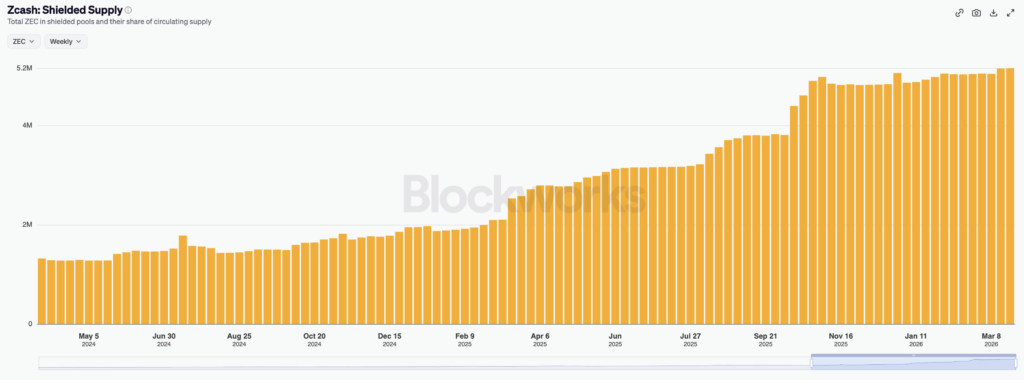
Zcash provides optional confidentiality features. This is the primary conceptual difference between the two. Users can choose between transparent and shielded transactions. But in 2026, only ~10–15% of ZEC transactions are shielded (per Electric Coin Company data). Even though it seems unnecessary, many businesses can use that feature. They can meet regulatory requirements while also benefiting from privacy.
Dash (DASH): Speed and Privacy Integration
The most casual and user-friendly altcoin in the ranking is Dash. They focuses on fast transactions and offers optional confidentiality features through PrivateSend and CoinJoin mixing. While not as privacy-focused as Monero or Zcash, Dash provides an easy-to-use option for those who prioritize transaction speed and lower fees. There were cases when mixed transactions were deanonymized.
Dash’s main goal is to be easy to use, with anonymity as a bonus. It’s perfect for people who want quick, private transactions and easy integration into their current financial systems.
Comparison of Top Privacy Coins (Zcash vs. Monero)
In the ongoing debate of Monero vs. Zcash, Monero stands out for its default anonymity, while Zcash prioritizes flexibility to choose.
| Coin | Privacy Type | Best For |
| Monero (XMR) | Mandatory | Users who need complete anonymity without compromise |
| Zcash (ZEC) | Flexible (Shielded) | Businesses/individuals needing a balance of anonymity and transparency |
Privacy spectrum
Use Cases for Privacy Coins
Private crypto is particularly useful in situations where financial confidentiality is essential. Common use cases include:
- Protecting sensitive information: Private cryptos help to protect users’ identities and financial activities.
- Avoiding financial control: In areas with strict financial monitoring, private coins allow people to maintain their economic freedom.
Legal Status of Privacy Coins (Regulatory Compliance in 2026)
In general, privacy coins are still legal, but there has been increasing regulatory pressure. Due to worries about their possible abuse, a number of nations have either delisted or banned these coins from major exchanges. It includes South Korea, Australia, and Japan.
In recent years, more governments have been considering similar restrictions. Pointing to the difficulty of tracking transactions and ensuring compliance with anti-money laundering (AML) and know-your-customer (KYC) regulations. The European Union, for instance, has been exploring frameworks that could impose stricter rules on privacy crypto.
However, Zcash’s selective anonymity model makes it more appealing to regulators, potentially increasing its long-term viability compared to fully anonymous ones like Monero.
Future of Privacy Coins
As the crypto world keeps evolving, more tokens are popping up with different features. Privacy coins, like Monero and Zcash, offer more anonymity and flexibility, but they also raise questions about transparency and trust.
In the end, a perfect balance between complete transparency and total privacy doesn’t exist. Regulators need to find a middle ground to ensure safety, while businesses need solutions to fight illegal activities and protect sensitive data.
Frequently Asked Questions (FAQ)
Secure coins are not illegal, but their use is subject to regulatory scrutiny in many countries. While Monero has faced delisting in several regions, Zcash’s selective transparency has allowed it to maintain a more favorable regulatory status.
Choosing the best security coin depends on your priorities. If you need complete anonymity, Monero is the best choice. If you require a balance of privacy and transparency, Zcash offers flexible confidentiality options. Dash is ideal for those seeking fast transactions and optional privacy.
When investing in private crypto consider factors such as the coin’s market capitalization, adoption, and technological features. Monero has a larger market cap, while Zcash offers more flexibility for users and businesses.
Conclusion
Your needs for safety and usability will determine which of Monero, Zcash, or Dash you should choose. Monero offers complete privacy. Zcash offers an optional one with auditability. Dash balances speed with secure features. Pick the one that best fits your values and needs for keeping your money private.
Related Articles
guarda.com/academy/blockchain/monero-vs-zcash-vs-dash/
coinmarketcap.com/view/privacy/
chainalysis.com/blog/privacy-coins-anonymity-enhanced-cryptocurrencies/