

Iron Fish (IRON) Exchange
Iron Fish is a Layer 1 blockchain where every transaction is shielded by zk-SNARKs — privacy is mandatory not optional. IRON is the native token used for gas and mined via FishHash PoW. Compare available exchange offers without registration. Note: native IRON requires an Iron Fish-compatible wallet.


رسوم Swapzone: 0%

Iron Fish (IRON) Market Data
PricePopular IRON Exchange Pairs


Other Cryptocurrencies to Exchange
 Cardano
 Solana
 GRAM
GRAM Pirate Chain
 Cookie DAO
 HOME
HOME MANEKI
 NEX
NEX PRO
PRO USDM
USDM GoМining
 Polyhedra Network
 LayerZero
Popular Alternatives to Buy

What Is Iron Fish (IRON)?
About Iron Fish
Iron Fish is a Layer 1 privacy blockchain where all transactions are encrypted using zk-SNARKs (zero-knowledge succinct non-interactive arguments of knowledge). Unlike Zcash which makes shielded transactions optional Iron Fish makes every transaction private by default — there is no transparent address type or optional privacy level. The sender
Why Use Iron Fish?
Iron Fish is designed for users and applications that require unconditional financial privacy — where the choice to reveal transaction details must remain entirely with the account holder. Because privacy is not a toggle but a protocol requirement there is no class of 'transparent' Iron Fish transactions that could leak metadata about account holders.
ChainPort provides bridges between the Iron Fish network and EVM chains allowing wrapped IRON to be used in EVM-based DeFi contexts. However bridged tokens operate on the bridging chain's transparency model — the privacy properties of native Iron Fish do not extend to wrapped representations on Ethereum or other public chains.
For developers Iron Fish's transaction model is based on the Sapling circuit (the same zk-SNARK design used in Zcash's shielded pool) providing a battle-tested cryptographic foundation for privacy-preserving smart contract applications.
How Iron Fish Transactions Work
Iron Fish uses a UTXO-based model where every note (the basic unit of value) is encrypted. When you create a transaction the network verifies the zk-SNARK proof that the transaction is valid — spending existing notes and creating new ones — without revealing any underlying amounts or addresses.
Iron Fish wallet addresses are not EVM-compatible 0x addresses. They use a format specific to the Iron Fish network — longer strings that are not interchangeable with Ethereum
How to Exchange IRON on Swapzone

How to Choose the Best IRON Exchange Offer


Iron Fish (IRON) Price Prediction
Iron Fish (IRON) Exchange FAQ

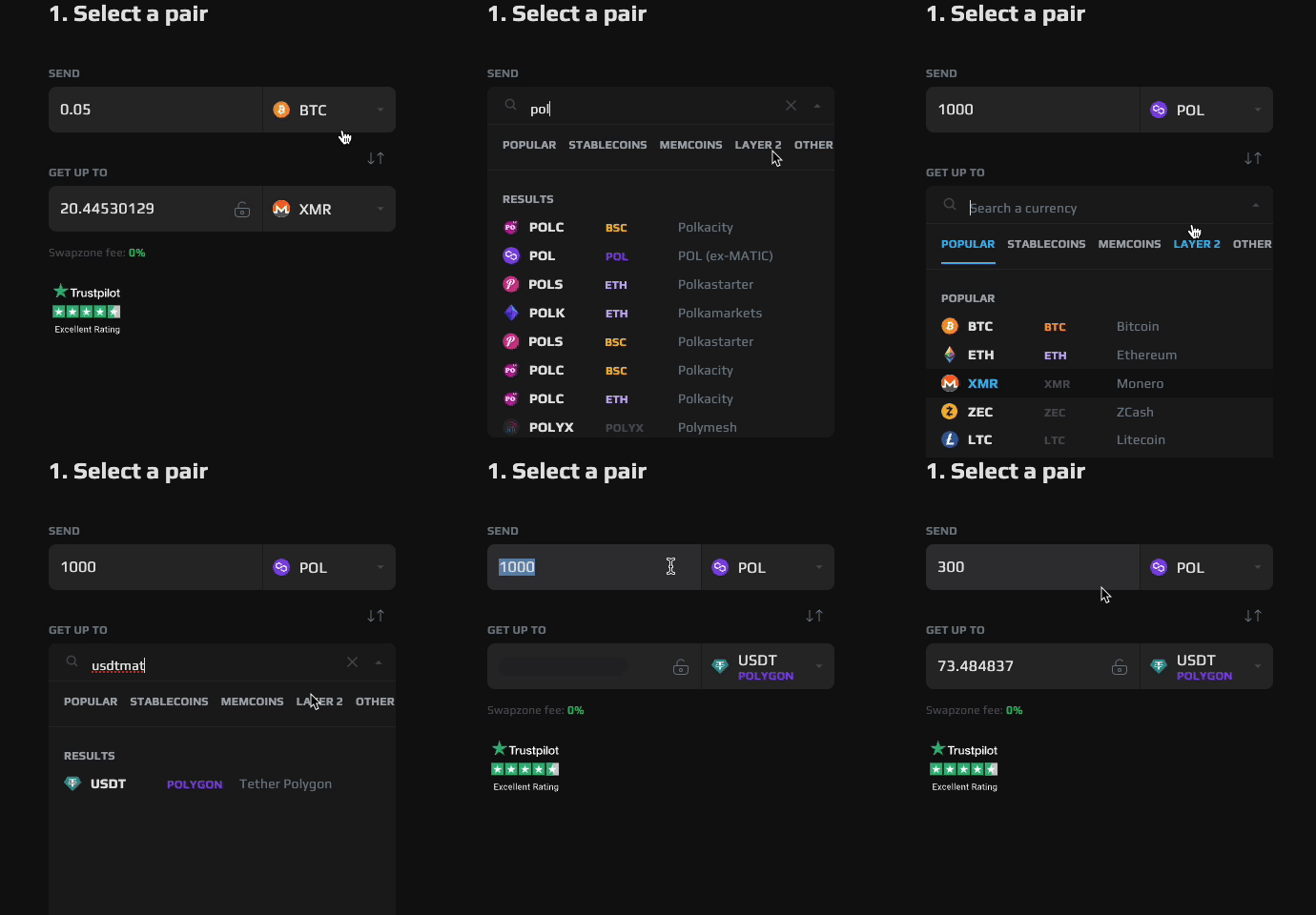
Go to the Swapzone Iron Fish exchange page
Select IRON as the sending currency on Swapzone
Swapzone supports IRON conversion to stablecoins (USDT
Use non-custodial aggregators (like Swapzone) that send funds directly to the partner without holding them. Verify you are using the correct address format for native IRON (Iron Fish address) versus bridged IRON (0x EVM address) — this is the most common source of loss on IRON swaps. Check partner ratings before selecting an offer. Iron Fish transactions are encrypted and irreversible on-chain once broadcast.
Centralised exchanges hold IRON in their wallets under your account. Decentralised options are limited: Iron Fish is not EVM-compatible so standard DEXes on Ethereum or Solana cannot natively trade IRON. On-chain trading of IRON (native) requires Iron Fish-compatible DEX infrastructure which is nascent. Bridged ERC-20 IRON on Ethereum can be traded on Ethereum DEXes but this is the wrapped representation not native Iron Fish with its privacy properties. Swapzone aggregates centralised partners for cross-chain IRON swaps.
IRON exchange fees come from the partner's spread visible on Swapzone as the difference between the offered rate and the market mid-price. Swapzone charges no additional fee. Iron Fish network fees for sending native IRON are minimal — fractions of IRON per transaction. For bridged ERC-20 IRON on Ethereum the receiving-side gas cost depends on Ethereum's current fee environment.
Minimum amounts are set by individual exchange partners and displayed on each offer on Swapzone. If your amount falls below a partner's minimum their offer is not shown. Given IRON's lower trading volume partner minimums for this asset may be higher in fiat equivalent than for more liquid assets.
IRON is the native token of the Iron Fish blockchain. Unlike most other Layer 1 projects Iron Fish does not have a separate utility token or governance token — IRON is simply the gas currency and the unit of account for the network. The Iron Fish blockchain is the privacy-preserving Layer 1; IRON is what you use to pay for transactions on it.
A bridged version of IRON also exists as an ERC-20 on Ethereum via ChainPort. This bridged token uses a standard 0x Ethereum address and does not carry the privacy properties of native IRON on the Iron Fish network. When exchanging confirm which version you are receiving.
Iron Fish is an open-source public blockchain accessible globally. Swapzone does not apply geographic restrictions to IRON exchanges. Whether specific exchange partners restrict US residents depends on each partner's compliance posture — check each partner's terms if you are in the United States. Privacy-preserving assets like IRON may attract additional scrutiny from some regulated platforms.
Go to the Swapzone Iron Fish page. Choose the currency you want to spend
Swapzone itself requires no identity verification. Individual partner KYC requirements are shown as a frequency label (Rare / Often / Never) on each offer. Partners labelled 'Never' or 'Rare' process IRON exchanges without identity documents for standard amounts. For privacy-focused assets like IRON look for partners with low KYC frequency if anonymity is a priority.
Why Exchange IRON with Swapzone?

Swapzone is a non-custodial aggregator. Your assets go directly to the chosen exchange partner — Swapzone never holds or controls your funds.

With fewer active partners for IRON comparing all available offers on Swapzone is the most reliable way to find the best rate for this privacy asset.

Swapzone covers 1

Swapzone Reviews


Good and Fast Support
Tyler from Swapzone's Support team was very kind and helps me out proactively. Highly recommend this site.
Excellent and reliable platform
Reliable and easy to use without the cumbersome KYC! Excellent exchange platform.
Quick service
Quick service. Transaction was processed with ease. Thank you Swapzone
Learn More About Cryptocurrencies


Our Exchange Partners
Contact us for partnership