

Dai (DAI) Exchange
DAI is a decentralised, overcollateralised stablecoin pegged 1:1 to the US dollar, issued by Sky Protocol (formerly MakerDAO) through on-chain smart contract vaults — not by a company holding cash reserves.


Comisión de Swapzone: 0%
DAI Market Data
PriceDAI Price Chart
Popular DAI Exchange Pairs


Other Cryptocurrencies to Exchange
 Cardano
 Solana
 GRAM
GRAM Pirate Chain
 Sei
Sei CYBER
CYBER CAKE
CAKE Kyber Network Crystal v2
 WETH
WETH SFP
SFP CGPT
CGPTPopular Alternatives to Buy

What Is DAI?
What Is DAI?
DAI is a decentralised, overcollateralised stablecoin pegged 1:1 to the US dollar, issued by Sky Protocol (formerly MakerDAO) through on-chain smart contract vaults — not by a company holding cash reserves. Users lock approved crypto collateral into Vaults to mint DAI; repaying the DAI loan plus a stability fee burns the minted tokens and releases the collateral. Approximately 4.57 billion DAI are in circulation as of October 2026, according to CoinGecko.
DAI Supply Model and Collateral
DAI has no hard cap — supply expands when users open Vaults and contracts when they repay. Each DAI in circulation represents outstanding debt collateralised by on-chain assets enforced by automated liquidation.
Supply model — elastic, no cap; minted against Vault collateral and burned upon repayment; circulating supply approximately 4.57 billion DAI as of October 2026, according to CoinGecko
Collateral types — ETH, wstETH (staked ETH), wBTC, USDC (via the Peg Stability Module), and real-world assets (tokenised treasuries and credit facilities)
Collateral mix — Sky reports collateral at the protocol level for DAI and USDS together, so the share backing DAI alone is not published separately; real-world assets and USDC held via the PSM are both significant components
Collateralisation ratio — set per collateral type by governance and always above 100%; automated on-chain liquidations enforce the minimum ratio
Peg Stability Module (PSM) — allows 1:1 swaps between USDC and DAI to absorb peg deviations; USDC inside the PSM remains subject to Circle's freeze function
DAI Savings Rate (DSR) — holders deposit DAI to earn protocol-set yield without a lock-up; rate adjusted by SKY governance
Stability fee — annualised interest on open Vault positions; set per collateral type
USDS migration — since August 2024 DAI can be upgraded to USDS at 1:1 via Sky's SkyMoneyConverter contract; DAI remains fully active and is not being deprecated
What Determines DAI's Peg and Demand
DAI's peg is maintained through two mechanisms. On the market side, arbitrageurs open new Vaults and mint DAI when it trades above $1, and repay loans at a discount when DAI trades below $1. On the protocol side, the PSM allows 1:1 USDC conversion, providing a hard floor and ceiling at the cost of introducing USDC counterparty exposure. Demand for DAI exchange and swap volume is structurally tied to DeFi activity: DAI functions as primary collateral in Aave, Compound, and Curve liquidity pools across Ethereum mainnet and L2 deployments, meaning every new DeFi lending or liquidity position that accepts DAI generates demand independent of speculative trading. DAI had a circulating supply of approximately 4.57 billion as of October 2026, according to CoinGecko, while Sky's newer stablecoin USDS has overtaken it in raw issuance.
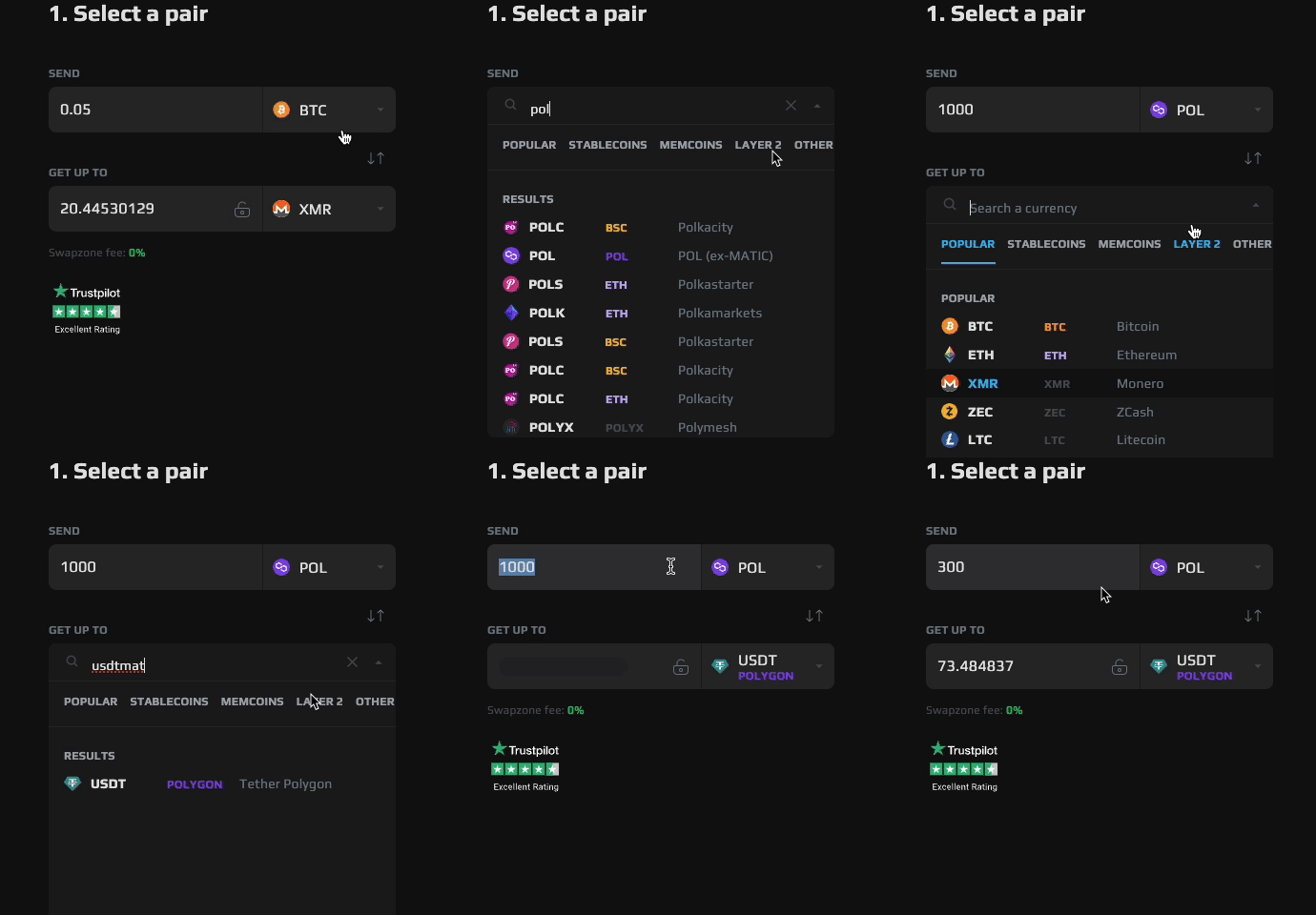
How to Exchange DAI on Swapzone

How to Choose a DAI Exchange Partner


DAI Peg Stability Analysis

Frequently Asked Questions About DAI

DAI is a decentralised stablecoin backed by overcollateralised crypto assets locked in on-chain Vaults — no company holds cash reserves behind it. USDC and USDT are fiat-backed stablecoins issued by centralised entities (Circle and Tether) that hold dollar deposits and Treasuries. DAI's peg is maintained by market arbitrage and on-chain liquidations, not by a custodian's reserve management.
Users must lock collateral worth more than the DAI they borrow, with the exact ratio set per collateral type. If the collateral value falls below the minimum ratio, automated smart contracts liquidate the Vault and burn the DAI debt. This system ensures every DAI in circulation is backed by more collateral than its face value, absorbing price volatility in the underlying assets without requiring manual intervention.
When a Vault's collateral-to-debt ratio falls below the minimum threshold, the protocol triggers automatic liquidation. The collateral is sold to repay the outstanding DAI debt plus a liquidation penalty. Any remaining collateral is returned to the Vault owner. Liquidation is fully automated by smart contracts with no human intermediary involved.
The DSR is a protocol-level savings mechanism where DAI holders deposit their tokens into a smart contract and earn yield without any lock-up period. The yield rate is set by SKY governance (formerly MakerDAO governance). Deposited DAI can be withdrawn at any time. The DSR rate fluctuates based on protocol revenue and governance decisions.
The PSM allows users to swap USDC for DAI (and vice versa) at a 1:1 rate with a small fee, providing a hard floor and ceiling for DAI's peg. When DAI trades above $1, arbitrageurs swap USDC for DAI via the PSM and sell the DAI for a profit; when DAI trades below $1, they buy cheap DAI and redeem it for USDC. Because USDC held in the PSM backs part of DAI, DAI carries some USDC counterparty exposure.
USDS launched in August 2024 as the successor stablecoin under Sky Protocol. DAI and USDS are interchangeable at 1:1 via Sky's SkyMoneyConverter contract at no cost. DAI remains fully active and is not being deprecated — both tokens share the same collateral pool. USDS has overtaken DAI in raw issuance, while DAI remains in wide use across DeFi.
No. DAI supply is elastic — it expands when users open new Vaults and borrow DAI against collateral, and contracts when they repay loans and burn their DAI. Total circulating supply reflects aggregate outstanding debt across all active Vaults. As of October 2026, approximately 4.57 billion DAI are in circulation, according to CoinGecko.
The stability fee is an annualised interest rate charged on open Vault positions. It is set per collateral type by SKY governance and can be changed by governance vote. As of June 2025, ETH vault rates were as low as 1.5% per year, according to coinlaw.io. The stability fee accrues continuously and must be repaid in DAI when the Vault is closed.
Part of the collateral in Sky Protocol, which issues DAI and USDS, consists of real-world assets (RWA) — tokenised treasuries and credit facilities managed through on-chain legal structures. These RWA vaults generate yield from off-chain instruments and channel it back to the Sky Protocol, diversifying collateral beyond purely crypto-native assets.
Yes. USDC held in the PSM is subject to Circle's freeze function at the USDC contract level, meaning those tokens can theoretically be blacklisted. This creates a degree of counterparty risk for DAI's peg mechanism that does not exist in Vaults backed purely by ETH or wBTC. Sky governance has debated reducing PSM exposure over time to improve censorship resistance.
Go to swapzone.io/exchange/dai, enter the DAI amount you want to send or the amount of the target currency you want to receive, and compare live offers from exchange partners. Each offer shows the rate, estimated completion time, and KYC frequency label. Select the offer, enter your destination wallet address, and send DAI to the deposit address provided. No registration is required.
Why Exchange DAI on Swapzone

Non-custodial aggregator — DAI goes directly to your wallet, never through Swapzone

Live DAI offers from exchange partners side by side.

Exchange DAI against 1,800+ cryptocurrencies

DAI Reviews on Trustpilot


Good and Fast Support
Tyler from Swapzone's Support team was very kind and helps me out proactively. Highly recommend this site.
Excellent and reliable platform
Reliable and easy to use without the cumbersome KYC! Excellent exchange platform.
Quick service
Quick service. Transaction was processed with ease. Thank you Swapzone
Learn More About Cryptocurrencies



Our Exchange Partners
Contact us for partnership