

Cronos (CRO) Exchange
CRO is the native utility token of Crypto.com's ecosystem, used for staking to unlock card cashback tiers on Crypto.com Visa cards, paying fees on the Cronos blockchain (EVM-compatible Layer 1), and earning rewards across Crypto.com's exchange and app products.


رسوم Swapzone: 0%

Cronos Market Data
PriceCronos (CRO) Price Chart
Popular CRO Exchange Pairs


Other Cryptocurrencies to Exchange
 Cardano
 Solana
 GRAM
GRAM Pirate Chain
 Lisk
Lisk Dogecoin
 Digibyte
 VeChain
 Steem
Steem Ardor
Ardor Dash
Dash Gnosis
 Bancor
 Aragon
 Basic Attention Token
 Decred
 Lunyr
Lunyr Enzyme
 PIVX
PIVXPopular Alternatives to Buy

What Is Cronos (CRO)?
What Is CRO?
CRO is the native utility token of the Crypto.com ecosystem — a centralised cryptocurrency exchange and financial services platform. Crypto.com was founded in 2016 and operates a centralised exchange, a DeFi wallet, an NFT marketplace, and a suite of Visa card products offering crypto cashback. CRO serves as the staking asset for Crypto.com card tier upgrades (locking CRO unlocks higher cashback percentages), the gas token for the Cronos blockchain (an EVM-compatible Layer 1 co-developed with Cosmos SDK), and the reward token within the Crypto.com app ecosystem.
CRO Tokenomics
CRO has a maximum supply of 100 billion tokens, and its history includes a burn and a reissue: in 2021 Crypto.com burned 70 billion CRO (70% of the original 100 billion supply), and in March 2025 a governance vote approved re-minting those 70 billion tokens into a strategic reserve wallet.
Maximum supply — 100 billion CRO, according to CoinGecko in October 2026
Circulating supply — approximately 49.5 billion CRO as of October 2026, according to CoinGecko
Burn and reissue — 70 billion CRO burned in 2021; the same amount was approved for re-minting into a strategic reserve wallet by a governance vote in March 2025
Staking for cards — users lock CRO for 180 days to qualify for Crypto.com prepaid Visa card tiers (check Crypto.com's current card terms); higher tiers require more CRO staked and unlock higher cashback percentages and additional perks
Cronos chain fees — CRO is the gas token for the Cronos EVM blockchain (separate from the Crypto.com exchange); gas fees paid in CRO are distributed to Cronos validators
Cronos chain — EVM-compatible, built with Cosmos SDK; supports Ethereum-compatible DApps and cross-chain communication via IBC
What Determines CRO's Value
CRO's demand is directly tied to Crypto.com's user growth and card program adoption. Each new user who wants a higher-tier Visa card must stake a minimum CRO amount for 180 days, locking tokens out of circulation. Crypto.com has secured major sponsorships (UFC, Formula 1, naming rights for the former Staples Center in Los Angeles renamed Crypto.com Arena), maintaining high brand visibility. The Cronos blockchain hosts a DeFi ecosystem including protocols like VVS Finance and MM Finance. CRO's price is sensitive to Crypto.com's regulatory status: the platform operates under multiple international licences and any regulatory enforcement action against Crypto.com directly affects CRO.
How to Exchange Cronos (CRO) on Swapzone

How to Choose a CRO Exchange Partner


Cronos (CRO) Price Analysis
Frequently Asked Questions About Cronos (CRO)

CRO serves three primary functions: staking to unlock Crypto.com Visa card cashback tiers (users lock CRO for 180 days to qualify); acting as the gas token for transactions on the Cronos EVM blockchain; and earning rewards within Crypto.com's app and exchange products. Card staking is a major demand driver — each user who wants a higher cashback tier must lock a minimum CRO amount.
Crypto.com Visa cards offer different cashback percentages depending on the card tier. Each tier requires a minimum CRO stake that must be locked for 180 days. If a user unstakes their CRO, their card tier drops to the base level. This creates a recurring lock-up demand: as more users acquire higher-tier cards, more CRO is locked out of circulation for 180-day periods at a time.
In 2021, Crypto.com burned 70 billion CRO tokens — 70% of the original 100 billion supply — in a single on-chain transaction, reducing the maximum supply to approximately 30 billion. The burn was publicly verifiable on-chain and was intended to improve CRO's tokenomics. In March 2025, a Cronos governance vote approved re-minting those 70 billion tokens into a strategic reserve wallet, so CoinGecko lists a maximum supply of 100 billion CRO as of October 2026. For holders, the pace at which reserve tokens reach circulation is a factor to follow.
Cronos is an EVM-compatible Layer 1 blockchain built with the Cosmos SDK, co-developed by Crypto.com. CRO is the gas token for Cronos. Cronos supports Ethereum-compatible DApps and cross-chain communication via the IBC (Inter-Blockchain Communication) protocol. Cronos is separate from Crypto.com's centralised exchange — it is a public blockchain where users can deploy smart contracts independently.
Cronos uses Cosmos SDK and supports IBC, allowing it to communicate with other Cosmos-SDK-based blockchains. For Ethereum connectivity, Cronos uses a bridge — the Crypto.com DeFi Wallet and third-party bridges allow users to move assets between Ethereum mainnet, BNB Chain, and Cronos. EVM compatibility means Ethereum smart contracts deploy on Cronos with minimal changes.
The Cronos DeFi ecosystem includes VVS Finance (a DEX with CRO trading pairs), MM Finance, and Tectonic (a lending protocol). Check DefiLlama for the current Total Value Locked (TVL) of the Cronos chain. Most Cronos DeFi protocols are forks or adaptations of established Ethereum DeFi protocols (Uniswap V2, Compound) modified for Cronos's EVM environment.
The Visa card program is available in the United States, Europe, Singapore, and other markets. Card cashback is paid in CRO and added to the user's Crypto.com app balance.
Crypto.com Arena is the former Staples Center in Los Angeles, renamed under a 20-year, $700 million naming rights deal announced in November 2021. It is the home venue of the Los Angeles Lakers, Kings, and Clippers. The sponsorship is a marketing investment in brand awareness — it does not directly affect CRO's supply or staking mechanics, but it increases Crypto.com's global brand visibility.
Crypto.com holds multiple regulatory licences across jurisdictions, including registration as a Money Services Business with FinCEN in the United States, Electronic Money Institution registration in Europe, and licences in Singapore, Dubai, and other markets. Regulatory actions against Crypto.com in any jurisdiction would affect the platform's ability to offer services in that region and would have a direct impact on CRO demand.
CRO is available on both Cronos (its native EVM chain) and Ethereum (as a legacy ERC-20 token). When receiving CRO through an exchange, confirm which network the partner sends on. Most modern platforms use CRO on Cronos; the Ethereum ERC-20 version may require bridging if you want to use it on the Cronos chain.
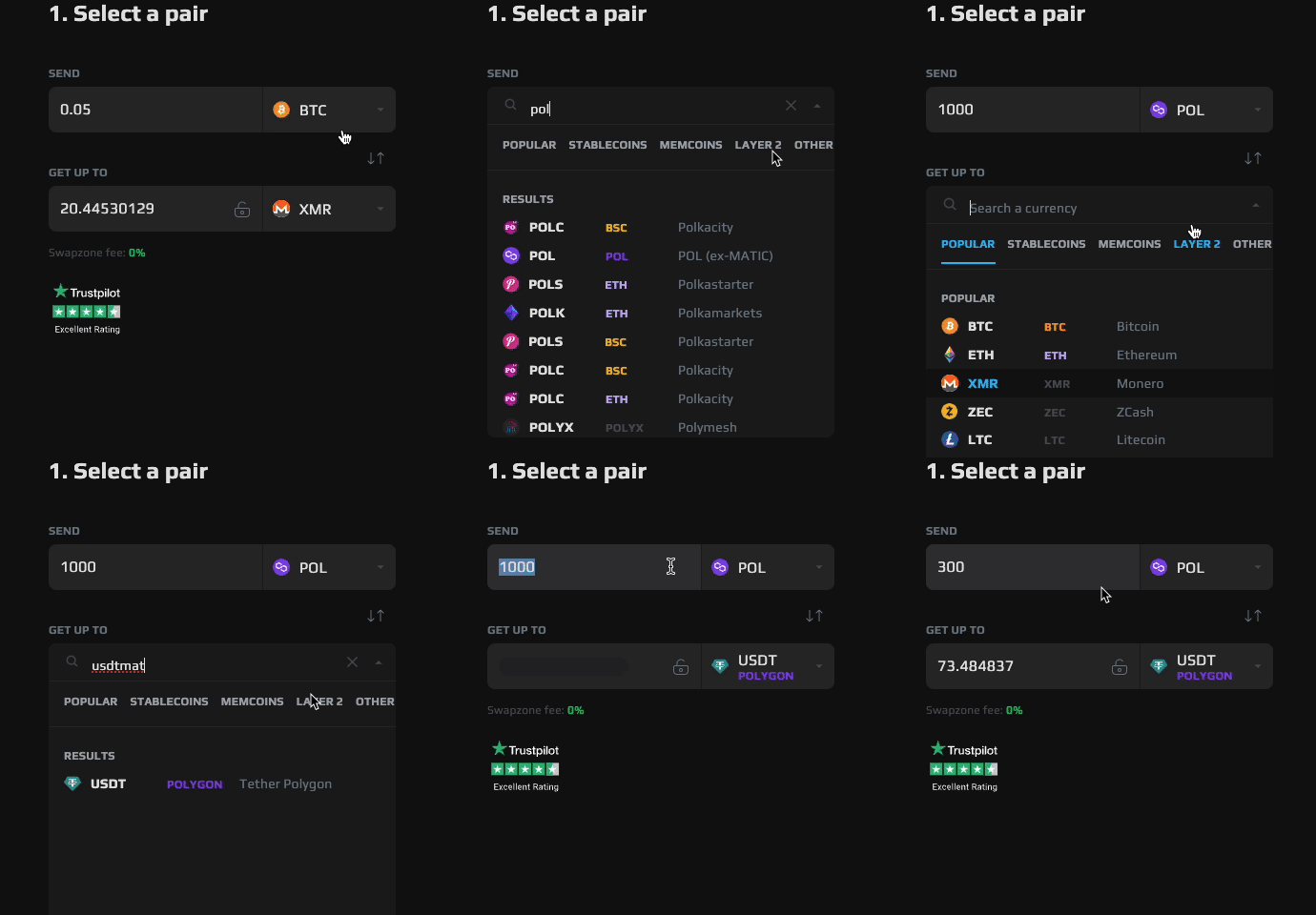
Go to swapzone.io/exchange/cronos, enter the CRO amount you want to send or receive, and compare live offers from exchange partners. Each offer shows the rate, estimated completion time, and KYC frequency label. Select the offer, enter your receiving wallet address, and send CRO to the deposit address provided. No registration is required on Swapzone.
Why Exchange Cronos on Swapzone

Non-custodial aggregator — CRO goes directly to your wallet, never through Swapzone

Live CRO offers from exchange partners side by side.

Exchange CRO against 1,800+ cryptocurrencies

Cronos Reviews on Trustpilot


Good and Fast Support
Tyler from Swapzone's Support team was very kind and helps me out proactively. Highly recommend this site.
Excellent and reliable platform
Reliable and easy to use without the cumbersome KYC! Excellent exchange platform.
Quick service
Quick service. Transaction was processed with ease. Thank you Swapzone
Learn More About Cryptocurrencies



Our Exchange Partners
Contact us for partnership