

Aave (AAVE) Exchange
"Looking to exchange AAVE? Swapzone compares live offers from partner exchanges by rate, speed and KYC label. No account, no custody, 0% platform fee. AAVE is an ERC-20 token on Ethereum: confirm the partner accepts ERC-20 AAVE on the right network."


Taxa Swapzone: 0%

Aave Market Data & Key Metrics
PricePopular AAVE Exchange Pairs


Other Cryptocurrencies to Exchange
 Cardano
 Solana
 GRAM
 Pirate Chain
 Lisk
 Dogecoin
 Digibyte
 VeChain
 Steem
 Ardor
 Dash
 Gnosis
 Bancor
 Aragon
 Basic Attention Token
 Decred
 Lunyr
 Enzyme
 PIVX
Popular Alternatives to Buy

What is AAVE?
About Aave
"AAVE is the governance token of Aave, a decentralized lending and borrowing protocol in DeFi. Founded by Finnish developer Stani Kulechov and originally launched as ETHLend in November 2017, the project rebranded to Aave (Finnish for “ghost”) in September 2018 and pivoted from peer-to-peer lending to a liquidity pool model that became widely used in DeFi lending. Aave allows users to deposit crypto assets into liquidity pools to earn interest and to borrow against their deposited collateral. The protocol pioneered flash loans, uncollateralized loans that must be borrowed and repaid within a single transaction block, enabling instant arbitrage, collateral swaps, and self-liquidation without requiring upfront capital. Aave V4, built on a Hub and Spoke architecture, went live on Ethereum mainnet on 30 March 2026. Aave is deployed across multiple chains including Ethereum, Polygon, Arbitrum, Optimism, Avalanche, Base, and BNB Chain."
AAVE tokenomics
"AAVE has a fixed maximum supply of 16 million tokens. The token was created through a migration from the original LEND token (about 1.3 billion LEND) at a 100:1 conversion ratio in October 2020, which produced 13 million AAVE plus 3 million AAVE for the ecosystem reserve.
Maximum supply — 16,000,000 AAVE (fixed; no inflationary minting)
Token migration — 13 million AAVE from LEND conversion (100 LEND = 1 AAVE); 3 million AAVE allocated to ecosystem reserve for protocol development and incentives
Umbrella — the legacy Safety Module has been superseded by Umbrella; according to Aave governance (May 2026), Umbrella staked tokens (stkwaTokens) are the assets subject to slashing first in a shortfall event, and legacy Safety Module stakers are no longer first in line
Governance — one AAVE equals one vote on protocol proposals including interest rate model changes, new asset listings, risk parameter adjustments, treasury spending, and protocol upgrades; voting occurs on-chain through the Aave Governance framework
Fee structure — Aave charges borrowers interest that flows to depositors, with a share going to the treasury; the flash loan fee is 0.05% in Aave V3 and can be changed by a governance vote
Buybacks — the Aave DAO runs an AAVE buyback program funded from protocol revenue; buybacks were paused from 19 April 2026 after the rsETH incident
Multi-chain deployment — AAVE exists as an ERC-20 on Ethereum and is bridged to supported L2s and alternative chains where the protocol operates"
What determines AAVE's value
"AAVE's value is tied to the total deposits, borrowing activity, and protocol revenue generated across all Aave deployments. Every dollar deposited into Aave creates lending capacity; every dollar borrowed generates interest income split between depositors and the protocol treasury. Governance of Aave's parameters and treasury is exercised by AAVE holders.
The fixed 16 million supply cap means no new AAVE enters circulation through inflation. Protocol revenue accumulates in the Aave treasury, which governance can direct toward buybacks, grants, or new product development; the AAVE buyback program was paused on 19 April 2026. In April 2026 an exploit of KelpDAO's rsETH bridge left an estimated $177 to $200 million of bad debt in Aave's WETH pool, while Aave's Umbrella insurance fund held about $50 million, according to The Defiant and Forbes reporting. Aave V4 and its rollout to more networks (Avalanche in July 2026, Arc in September 2026) are part of the protocol's growth plans."
How to Exchange Aave on Swapzone

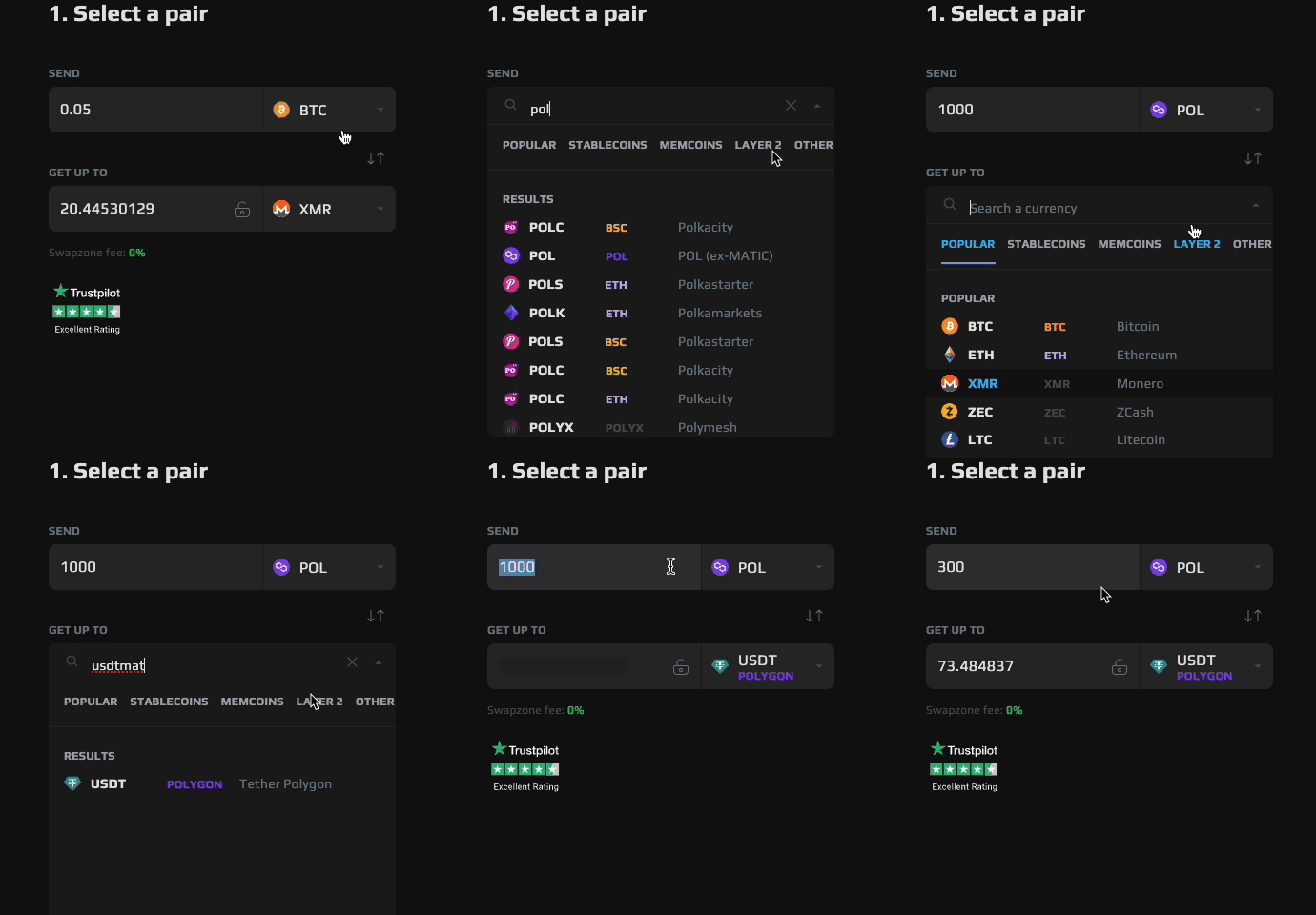
How to Choose an Aave Exchange


Aave (AAVE) Price Analysis

Frequently Asked Questions About Aave (AAVE)

"Stani Kulechov launched it as ETHLend in November 2017. In September 2018 it rebranded to Aave, Finnish for ghost, and moved from peer-to-peer lending to a liquidity pool model that became the standard for DeFi lending."
"In October 2020 LEND converted to AAVE at 100:1. That produced 13 million AAVE from LEND holders, plus 3 million AAVE allocated to an ecosystem reserve for protocol development and incentives. The supply is fixed with no inflationary minting."
"Umbrella is Aave's insurance mechanism that replaced the legacy Safety Module. Stakers of Umbrella staked tokens (stkwaTokens) back the protocol against shortfall events, meaning bad debt, and can be slashed to cover a deficit. According to Aave governance (May 2026), legacy Safety Module stakers are no longer first in line to be slashed."
"A flash loan is an uncollateralized loan that must be borrowed and repaid within a single transaction block. Aave pioneered them, and they enable instant arbitrage, collateral swaps, and self-liquidation without upfront capital."
"The flash loan fee is 0.05% in Aave V3 and can be changed by a governance vote. A part of the fee goes to the protocol treasury and the rest to liquidity providers, according to the protocol's configuration."
"One AAVE equals one vote on interest rate model changes, new asset listings, risk parameter adjustments, treasury spending, and protocol upgrades. Voting happens on-chain through the Aave Governance framework."
"Ethereum, Polygon, Arbitrum, Optimism, Avalanche, Base, and BNB Chain, among others. Aave V4 launched on Ethereum mainnet on 30 March 2026 and later on Avalanche (July 2026). The AAVE token is an ERC-20 on Ethereum, bridged to supported L2s and other chains."
"Borrowing rates on Aave are set by the protocol according to pool utilisation, and borrowers pay interest that flows to depositors, with a share going to the protocol treasury."
"With a 16 million cap no new AAVE enters circulation through inflation. Staking in Aave's insurance mechanisms can also lock tokens. Neither guarantees a price increase, because demand can still fall."
"Protocol revenue accumulates in the Aave treasury, which governance can direct toward buybacks, grants, or new product development. The DAO's AAVE buyback program was paused on 19 April 2026 after the rsETH incident. Where revenue goes is a governance decision, not automatic."
"Open swapzone.io/exchange/aave, enter the amount, compare offers by rate, time, and KYC label, paste a 0x address on the stated network, and send AAVE to the deposit address. No MEMO is needed."
Why Exchange Aave with Swapzone?

"Non-custodial aggregator: you send AAVE to the partner's deposit address and receive funds in your own wallet, never through Swapzone."

Live AAVE offers from exchange partners side by side.

"Swap AAVE with 1,800+ cryptocurrencies."

Reviews from TrustPilot


Good and Fast Support
Tyler from Swapzone's Support team was very kind and helps me out proactively. Highly recommend this site.
Excellent and reliable platform
Reliable and easy to use without the cumbersome KYC! Excellent exchange platform.
Quick service
Quick service. Transaction was processed with ease. Thank you Swapzone
Learn More About Cryptocurrencies


Our exchange partners for Aave
Contact us for partnership