


 Cardano
 Solana
 GRAM
GRAM Pirate Chain
 STONK
STONK BONER
BONER XAUH
XAUH IoTeX
IoTeX Loom Network
 Nano (Old)
 BitTorrent-New
 Nimiq
Nimiq SIRIN LABS Token
 BLOCKv
 SmartCash
 Ark
Ark Mithril
 Gemini Dollar
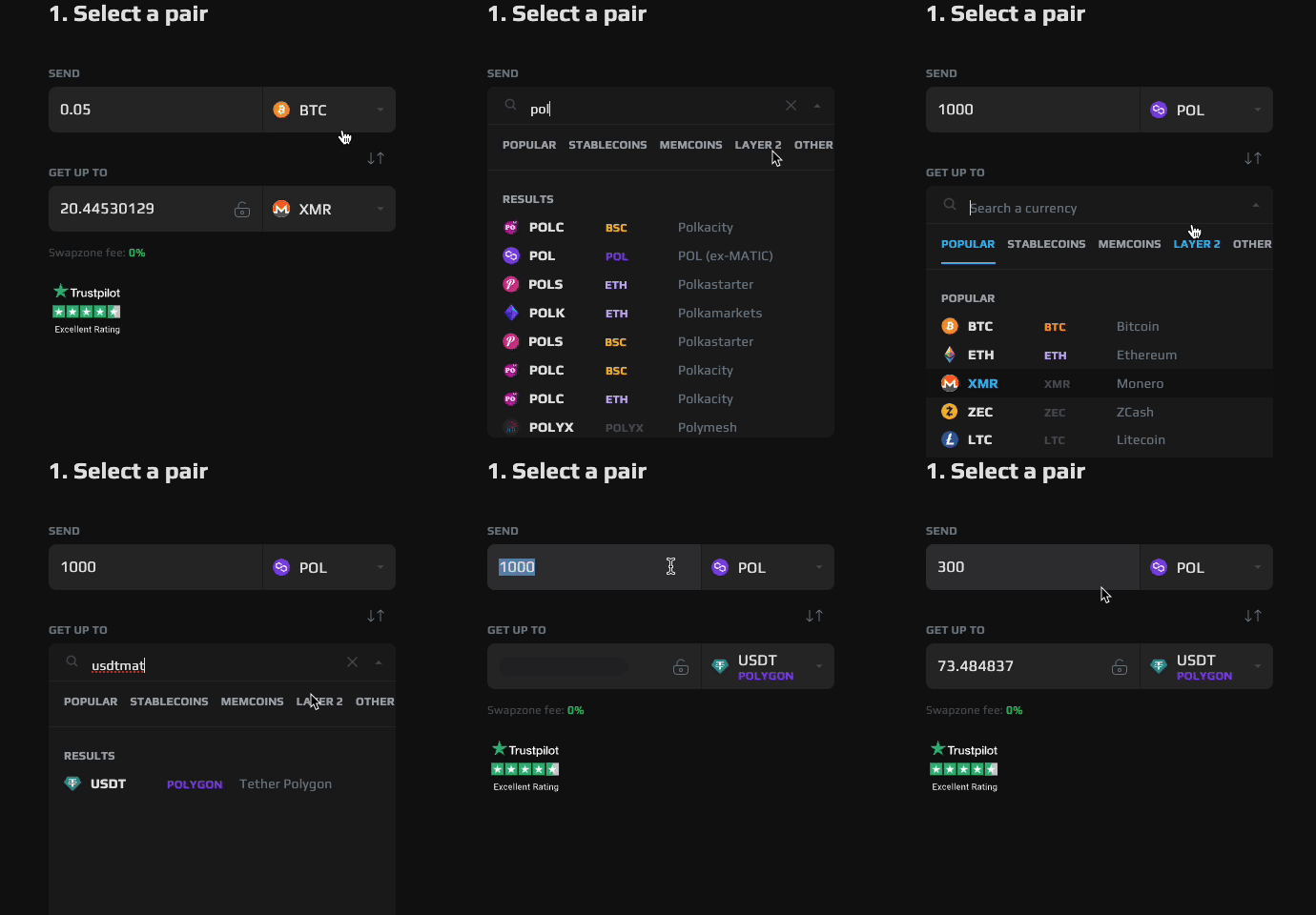

You can exchange crypto without going through KYC (Know Your Customer)
Delisted EOS (EOS) Exchange
Find the best liquidity routes for EOS (EOS). We gather rates from multiple instant swap platforms, allowing you to convert EOS without limits. Explore the live exchange rates and process your transaction within minutes in a fully secure, non-custodial environment.
enviar

eos

recibir

Comisión de Swapzone: 0%

Delisted EOS market data & key metrics
Price$ 0.10
24h % price
-1.45%
7d % price
0.30%
Market Cap
-
24h volume
$ 223,788.69
Coin supply
2,100,000,000
Popular EOS (Delisted) exchange pairs
Intercambiar EOS PorPairsStatus
Other Cryptocurrencies Exchange Pairs
BitcoinbtcEthereumethMoneroxmrZCashzecLitecoinltcXRPxrpTetherusdtStellarxlmTRONtrxUSD CoinusdcCardanoadaSolanasolGRAMtonPirate ChainarrrUSDCEusdceopSTONKstonkBONERbonerUSDCusdcarcXAUHxauherc20IoTeXiotxLoom NetworkloomNano (Old)nanoBitTorrent-NewbttNimiqnimSIRIN LABS TokensrnBLOCKvveeSmartCashsmartArkarkMithrilmithGemini Dollargusd
Popular Alternatives to

What Is EOS (rebranded to Vaulta)?
About EOS (Delisted)
EOS (EOS) is a legacy name for the native asset of the EOS Network, a high‑performance blockchain launched in 2018 and designed for decentralized applications (dApps) and scalable Web3 services. In 2025, the project underwent a rebranding and the network started operating under the Vaulta name, with EOS being replaced by a new native token called A on a 1:1 basis (1 EOS → 1 A), according to the migration plan announced in 2025.
Today, users may still encounter the EOS ticker on some exchanges and in older interfaces, but the active, supported asset of the network is Vaulta’s A token. EOS balances are generally treated as legacy holdings that can be migrated to A via supported wallets, exchanges, or the official migration tools provided by the project.
Why Do People Still Trade EOS?
EOS continues to trade on certain platforms because it represents legacy exposure to the original EOS Network before and during the transition to Vaulta. For some traders, EOS markets are used to arbitrage price differences, manage positions opened prior to the rebranding, or gradually migrate liquidity into the new A token.
Crypto exchange aggregators and instant swap services may list both EOS and A pairs, reflecting different stages of integration across providers. As a result, users can still convert EOS into other digital assets, but long‑term network participation and new features are generally centered around the Vaulta (A) token rather than the legacy EOS ticker.
How EOS Transactions Work Today?
On the protocol level, transactions in this ecosystem are processed by a Delegated Proof‑of‑Stake (DPoS) blockchain, where elected block producers validate blocks and maintain the network. Historically, EOS used a resource‑based model in which users staked tokens to access CPU and NET bandwidth instead of paying a conventional per‑transaction fee; this design was preserved and evolved under the Vaulta branding.
When interacting with exchanges or aggregators, users should distinguish between legacy EOS transfers and operations with the current A token. Some services only support deposits and withdrawals in A, while others keep EOS support during the migration period, so it is important to check which asset and network are used before sending any transaction.
How to exchange EOS (Delisted) on Swapzone
How to Choose the Best EOS (Delisted) Exchange Platform
The Internet is full of instant crypto exchange services, and there are many factors to consider when choosing the best EOS exchange. These include EOS price, fees, speed, ratings, and KYC policies. The process can be daunting, but Swapzone can help. We provide you with all the information you need to exchange EOS at the best rate, fast and through a reliable exchange platform. No registration, no loss of custody, no registration swap.
By rates
By the highest transaction speed
By best rating
On Swapzone, you can opt for the most profitable exchange deal on the crypto market. To do that, sort available Bitcoin offers by rates by clicking on the Best Rate button above the offers. The most favorable EOS exchange rate will be listed at the top with a green Best Rate label next to its exchange provider.
EOS Price Prediction
EOS is a delegated proof-of-stake smart contract platform that has undergone significant revitalization under the EOS Network Foundation since separating from Block.one. Its price reflects DeFi activity across EOS-native protocols, ENF governance
proposals, developer grant programs, and network progress on the Antelope protocol shared with WAX and Telos. DeFi TVL and daily transaction count are the primary on-chain metrics to monitor.
No EOS price prediction is guaranteed. EOS is highly volatile and trades significantly below historical highs. Always evaluate current network activity rather than past performance, and do your own research before making any financial decision.Disclaimer: This content is for informational purposes only and does not constitute financial or investment advice. Swapzone is a non-custodial exchange aggregator; we compare rates across providers, not predict markets.
proposals, developer grant programs, and network progress on the Antelope protocol shared with WAX and Telos. DeFi TVL and daily transaction count are the primary on-chain metrics to monitor.
No EOS price prediction is guaranteed. EOS is highly volatile and trades significantly below historical highs. Always evaluate current network activity rather than past performance, and do your own research before making any financial decision.Disclaimer: This content is for informational purposes only and does not constitute financial or investment advice. Swapzone is a non-custodial exchange aggregator; we compare rates across providers, not predict markets.

Frequently asked questions
What does EOS mean in crypto?
EOS stands for EOS Network, a Layer-1 blockchain platform launched in 2018 by Block. one following one of the largest initial coin offerings in crypto history, raising approximately $4 billion. The name "EOS" was never officially expanded as an acronym by the team; it was simply the project's brand identity.
The EOS token launched in 2018 under the Delegated Proof-of-Stake (DPoS) consensus mechanism, introducing on-chain staking and governance. The token handled computation, bandwidth, storage, and validation on the EOS network.
EOS was originally positioned as a high-throughput "Ethereum killer" capable of processing thousands of transactions per second with no user-facing fees. In trading contexts, EOS refers specifically to the native token of this network, though as of May 2025, the project has rebranded, and the token now trades under the ticker $A (Vaulta). If you encounter EOS on older exchange listings or price trackers, it refers to the same underlying asset now known as Vaulta.
Is EOS dead, and why is it being delisted?
EOS is not technically dead, but it underwent a significant rebrand in 2025 specifically because the project had lost relevance under its original identity and the wave of delistings reflects that transition rather than a project shutdown.
The situation worsened when Tether discontinued support for EOS in 2023, removing a key liquidity component from the network. Developer activity declined, user numbers dropped, and a lack of major projects and DeFi growth pushed EOS further to the margins of the crypto market.
In March 2025, the EOS Network announced it was rebranding to Vaulta, shifting its focus toward "Web3 banking," aiming to blend decentralized finance with traditional banking systems. The $EOS token became $A in a 1:1 swap process beginning May 14, 2025. This was not a fork or reset: Vaulta retained EOS's blockchain history and infrastructure.
Why the delistings: The EOS-to-Vaulta transition created a compliance and logistics challenge for exchanges. Many platforms delisted EOS because they determined they would not support the token swap to Vaulta ($A), choosing to delist rather than facilitate the migration for their users. Exchanges that did support the transition, such as Binance, facilitated the 1:1 swap for their users and continued listing the asset under the new $A ticker.
Where to swap or trade EOS (now Vaulta / AEOS)?
Given the May 2025 rebrand, the answer depends on when you acquired your EOS and whether you have already swapped to Vaulta (AEOS):
If you still hold legacy EOS tokens: Check whether your current wallet or exchange supports the Vaulta swap portal. The transition is handled through the official Vaulta Swap Portal and major supported exchanges, with the process retaining all blockchain history and infrastructure. Exchanges that did not support the swap have delisted EOS entirely. If you hold EOS on such a platform, withdraw to a compatible wallet first before the withdrawal window closes.
If you hold Vaulta (AEOS): Major exchanges including Binance support the AEOS token following the transition. Several exchanges also list Vaulta (AEOS). For non-custodial swaps, check Swapzone for current partner availability; the pair may be listed under EOS or Vaulta depending on when exchange data was last updated.
For swapping: Swapzone aggregates real-time rates from partner exchanges for both legacy EOS and Vaulta (AEOS) where supported, allowing you to compare offers and swap to BTC, USDT, ETH, or other assets without creating an account. Given the ongoing transition, always verify which token version a partner exchange is quoting before confirming a swap.
Why exchange EOS with Swapzone?
Mayor seguridad
We check all exchangers for the risk of freezing funds. Your funds will definitely reach you!

Mejores tasas
We're showing the offers from the most popular and reliable exchange providers. Pick the best offer for your crypto pair!

Más de 3000 monedas disponibles
It's really hard not to find the crypto you need on Swapzone :)

Reviews from TrustPilot

TrustPilot 4.7 |536 reseñas


Good and Fast Support
Tyler from Swapzone's Support team was very kind and helps me out proactively. Highly recommend this site.
Excellent and reliable platform
Reliable and easy to use without the cumbersome KYC! Excellent exchange platform.
Quick service
Quick service. Transaction was processed with ease. Thank you Swapzone
Learn More About Cryptocurrencies

How to Exchange Crypto Without Verification
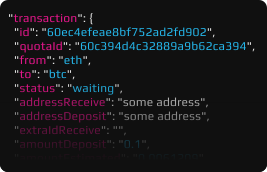
Crypto Exchange API
Enable crypto swaps, staking, loans, and fiat in your app—without building 30 integrations.

Crypto Wallet Security Tips
Why Should You Really Care About Bitcoin and Crypto Security?

Hidden Fees in Crypto: Why You Pay More Than You See
Uncover the hidden costs of crypto trades, from spreads to slippage, and learn how to minimize them
Our exchange partners for EOS
Contact us for partnership