

USDD (USDD) Exchange
Looking to exchange USDD? Swapzone compares live offers from partner exchanges by rate, speed and KYC label. No account, no custody, 0% platform fee. USDD exists on TRON (TRC-20), Ethereum (ERC-20), and BNB Chain (BEP-20): confirm the network before sending.


Commissione Swapzone: 0%

USDD Market Data & Key Metrics
PricePopular USDD Exchange Pairs


Other Cryptocurrencies to Exchange
 Cardano
 Solana
 GRAM
 Pirate Chain
 Elrond
 Secret
 Flamingo
 Filecoin
 Aave
 DeFiPulse Index
 Dollar
 Euro
 Chrono.tech
 OKB
 Terra 2.0
 BAND
 Unibright
 Kleros
 SUN
Popular Alternatives to Buy

What is USDD?
About USDD
USDD (Decentralized USD) is a stablecoin launched in May 2022 by the TRON DAO Reserve in the TRON ecosystem founded by Justin Sun. USDD targets a 1:1 peg to the US dollar. It originally launched as an algorithmic stablecoin using a TRX mint-and-burn mechanism similar to Terra's UST, but after the Terra collapse in May 2022 and USDD's own depeg to about $0.97 in June 2022, the TRON DAO Reserve added collateral and moved the protocol toward an over-collateralized model. USDD 2.0 launched on TRON in January 2025 with an over-collateralized design and a staking yield subsidized by TRON DAO, and it was deployed on Ethereum on September 8, 2025, according to Messari and DropsTab.
USDD supply and backing
USDD does not have a fixed maximum supply. New USDD is minted when demand increases and burned when holders redeem, with supply adjusting to maintain the dollar peg. The backing model relies on crypto assets and stablecoins held by the TRON DAO Reserve rather than on cash reserves or US Treasuries.
Supply — approximately 1.58 billion USDD as of October 2026, according to CoinGecko
Collateral — a basket of crypto assets and stablecoins, including TRX, sTRX, BTC, USDT, and USDC, held by the TRON DAO Reserve; the reserve composition and collateral ratio are published by TRON DAO and change over time
Peg Stability Module (PSM) — enables 1:1 swaps between USDD and USDT or USDC, allowing arbitrageurs to correct peg deviations
sUSDD — staked USDD earns a variable yield; the 20% APY announced for the USDD 2.0 launch in January 2025 was fully subsidized by TRON DAO, and current yields can differ
Chains — natively issued as TRC-20 on TRON; deployed on Ethereum since September 8, 2025; also available on BNB Chain
What determines USDD's peg stability
USDD's peg relies on layers of defense. The PSM provides the first line: any time USDD trades below $1, arbitrageurs can swap USDD for USDT or USDC at par through the module and sell for profit, which pushes the price back to $1. Over-collateralization provides the second line: reserve assets are meant to exceed the USDD in circulation, which absorbs a decline in TRX or BTC before the peg is threatened. Reserve rebalancing by the TRON DAO Reserve provides the third line: the published composition has shifted over time from TRX-heavy toward stablecoins, which reduces volatility exposure.
USDD's history includes depeg events (June 2022 and later in 2022) that tested earlier versions of the stability mechanism. The reserve is managed by TRON DAO Reserve, so holders depend on its published reserve data and management, and the collateral mix still includes TRX and other volatile assets.
How to Exchange USDD on Swapzone

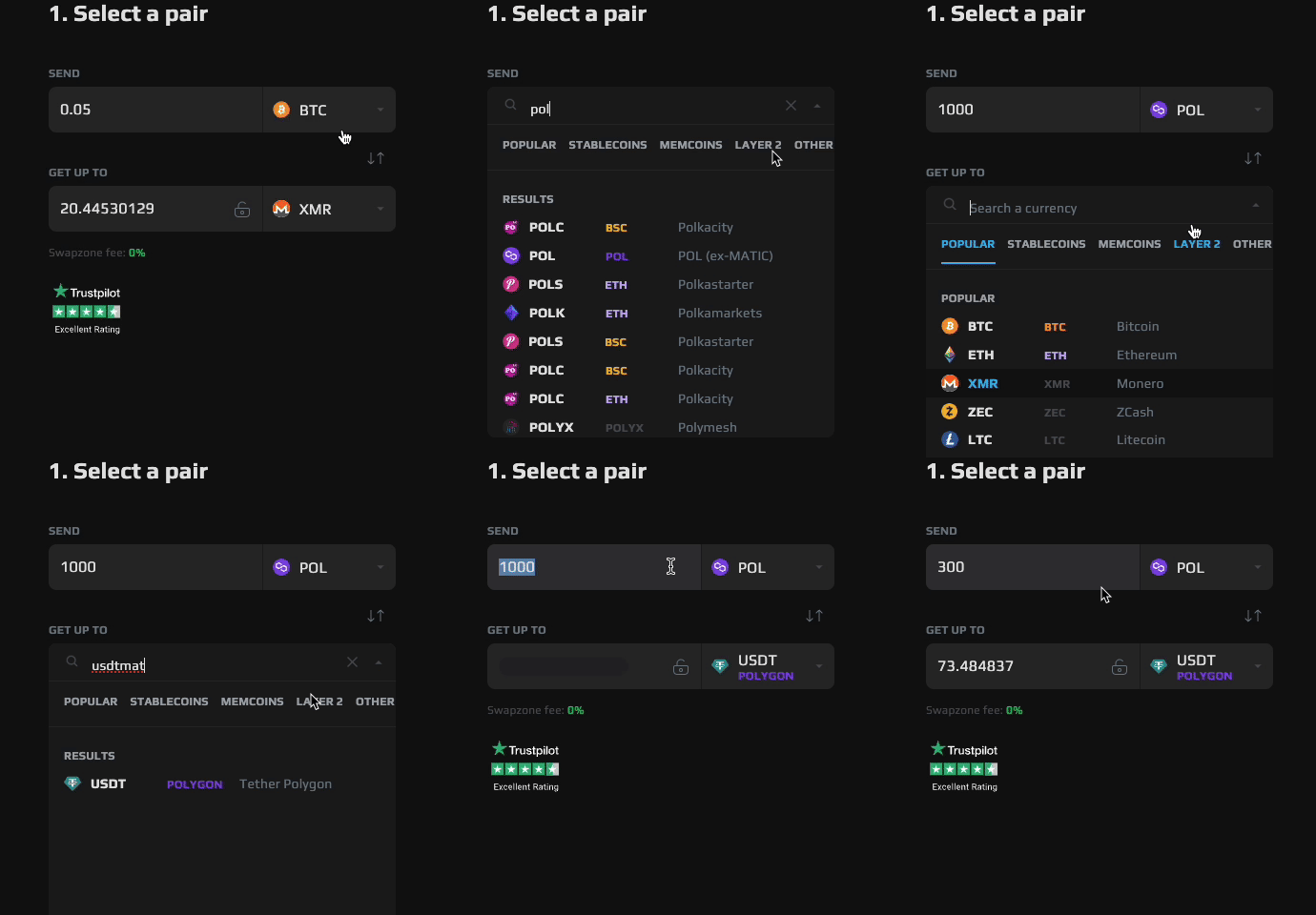
How to Choose an USDD Exchange


USDD (USDD) Price Analysis

Frequently Asked Questions About USDD (USDD)

The TRON DAO Reserve manages USDD's reserve in the TRON ecosystem founded by Justin Sun. USDD is backed by a basket of crypto assets, including TRX, sTRX, BTC, USDT, and USDC; the collateral ratio and reserve composition are published by the TRON DAO Reserve.
Yes. It launched in May 2022 with a TRX mint-and-burn mechanism similar to Terra's UST. After Terra's collapse in May 2022 and USDD's own depeg to $0.97 in June 2022, the protocol moved to an over-collateralized model.
USDD 2.0 launched on TRON in January 2025 with an over-collateralized design, a Peg Stability Module for 1:1 swaps against USDT or USDC, and a staking yield subsidized by TRON DAO. It was deployed on Ethereum on September 8, 2025.
If USDD trades below $1, arbitrageurs swap USDD for USDT or USDC at par through the module and sell the stablecoin for a profit. The buying pressure pushes USDD back toward $1.
It means the reserve assets are meant to be worth more than the USDD in circulation. The extra buffer absorbs a sharp fall in TRX or BTC before the peg is threatened, but it does not remove the risk. Check the collateral ratio published by the TRON DAO Reserve for the current figure.
In 2022 the reserve was TRX-heavy. Since then the TRON DAO Reserve has shifted toward stablecoins such as USDT and USDC while still holding TRX, sTRX, and BTC. The current composition is published by the TRON DAO Reserve.
The TRON DAO Reserve manages the reserve assets backing USDD. Holders rely on its published reserve data and on the stability mechanisms, which makes reserve transparency a key point to check.
sUSDD is staked USDD that earns a variable yield. TRON DAO announced a 20% APY, fully subsidized by TRON DAO, for the USDD 2.0 launch in January 2025; later rates can differ. Treat any advertised yield as variable and not guaranteed.
USDD is natively issued as TRC-20 on TRON, was deployed on Ethereum on September 8, 2025, and is also available on BNB Chain. Choose the network the swap offer states.
Yes. USDD fell to about $0.97 in June 2022, and a later depeg in 2022 is also reported. CoinGecko listed USDD at about $0.999 in October 2026. A stable price today does not remove depeg risk.
Open swapzone.io/exchange/usdd, enter the amount, and compare offers. Choose TRON, Ethereum, or BNB Chain, paste the matching address, send USDD to the deposit address, and track the order. No MEMO is needed.
Why Exchange USDD with Swapzone?

Non-custodial aggregator: you send USDD to the partner's deposit address and receive funds in your own wallet, never through Swapzone.

Live USDD offers from exchange partners side by side.

Swap USDD with 1,800+ cryptocurrencies.

Reviews from TrustPilot


Good and Fast Support
Tyler from Swapzone's Support team was very kind and helps me out proactively. Highly recommend this site.
Excellent and reliable platform
Reliable and easy to use without the cumbersome KYC! Excellent exchange platform.
Quick service
Quick service. Transaction was processed with ease. Thank you Swapzone
Learn More About Cryptocurrencies


Our exchange partners for USDD
Contact us for partnership