

Jupiter (JUP) Exchange
Looking to exchange JUP? Swapzone compares live offers from partner exchanges by rate, speed and KYC label. No account, no custody, 0% platform fee. JUP is a Solana SPL token: confirm the partner accepts JUP on Solana and use a Solana address.


Swapzone ücreti: 0%

Jupiter Market Data & Key Metrics
PricePopular JUP Exchange Pairs


Other Cryptocurrencies to Exchange
 Cardano
 Solana
 GRAM
 Pirate Chain
 Mysterium
 FUNToken
 Numeraire
 Enjin Coin
 Kyber Network
 Atletico De Madrid Fan Token
 PowerLedger
 Chainlink
 Streamr
 Loopring
 Request
 Ambrosus
 Decentraland
Popular Alternatives to Buy

What is JUP?
About Jupiter
JUP is the governance token of Jupiter, a decentralised exchange aggregator on Solana. Traders and protocols use Jupiter's routing engine to execute on-chain swaps at optimal prices by splitting orders across multiple liquidity pools automatically — JUP holders govern the platform's direction, vote on integrations and fee structures, and earn Active Staking Rewards for governance participation. Jupiter handled approximately 95% of Solana's DEX aggregator volume and around 80% of on-chain perpetuals trading as of April 2025, according to Blockworks.
JUP tokenomics
Jupiter launched with a maximum supply of 10 billion JUP. In January 2025, the community governance vote “Catstanbul” approved a 3 billion JUP burn — reducing the hard cap to 7 billion tokens and cutting the original maximum supply by 30%. In February 2026 a further DAO vote passed with 75% approval to reduce the net release of future tokens to zero. Total supply stood at approximately 6.86 billion JUP as of October 2026 after burns, of which approximately 3.32 billion were in circulation, according to CoinGecko.
Hard cap post-burn — 7,000,000,000 JUP; 3 billion tokens permanently destroyed in January 2025 via the Catstanbul governance decision
Total supply — approximately 6.86 billion JUP as of October 2026 after burns, below the 7 billion post-burn ceiling
Circulating supply — approximately 3.32 billion JUP as of October 2026, according to CoinGecko
Community allocation — 40% of the original supply was airdropped to active users at launch, establishing distributed ownership from day one
Jupuary airdrop — the final Jupuary distribution had its snapshot on January 30, 2026 and totalled 400 million JUP (200 million to active users and 200 million to stakers), down from 700 million in the prior cycle
Net-zero emissions vote — passed on February 22, 2026 with 75% approval; about 700 million JUP that had been set aside for Jupuary moved to a community cold multisig wallet that cannot be used without a new DAO vote
Buyback program — Jupiter has executed approximately $70 million in open-market JUP buybacks to offset unlock-related sell pressure, according to BlockchainReporter
Team vesting — co-founder “Meow” personal token allocation is locked until 2030; 253.47 million JUP unlocked February 28, 2026 per the published vesting schedule
Governance rewards — JUP stakers who participate in Active Staking Rewards (ASR) earn additional JUP for consistent governance engagement
What determines JUP's value
JUP's primary demand driver is Solana DEX volume: Jupiter earns swap fees on every trade routed through its aggregator, and a portion of that fee revenue funds governance rewards and buybacks. With over $3 billion in TVL as of October 2025 and a top-3 position in Solana DeFi revenue, according to CoinGecko, Jupiter's cash flow from fees scales directly with on-chain activity on Solana. Every uptick in Solana trading volume increases Jupiter's routing fee income — the mechanism that funds both ASR payouts to JUP stakers and the ongoing buyback programme.
The secondary factor is supply management: the January 2025 burn removed 3 billion tokens permanently, and the February 2026 net-zero emissions vote, together with the smaller final Jupuary distribution of 400 million JUP (versus 700 million in 2025), signals active community preference for limiting dilution. Jupiter has also expanded beyond swap aggregation — JupSOL is its liquid staking token for SOL, while perpetuals trading and the LFG Launchpad extend fee-generating surfaces beyond spot swaps alone.
How to Exchange Jupiter on Swapzone

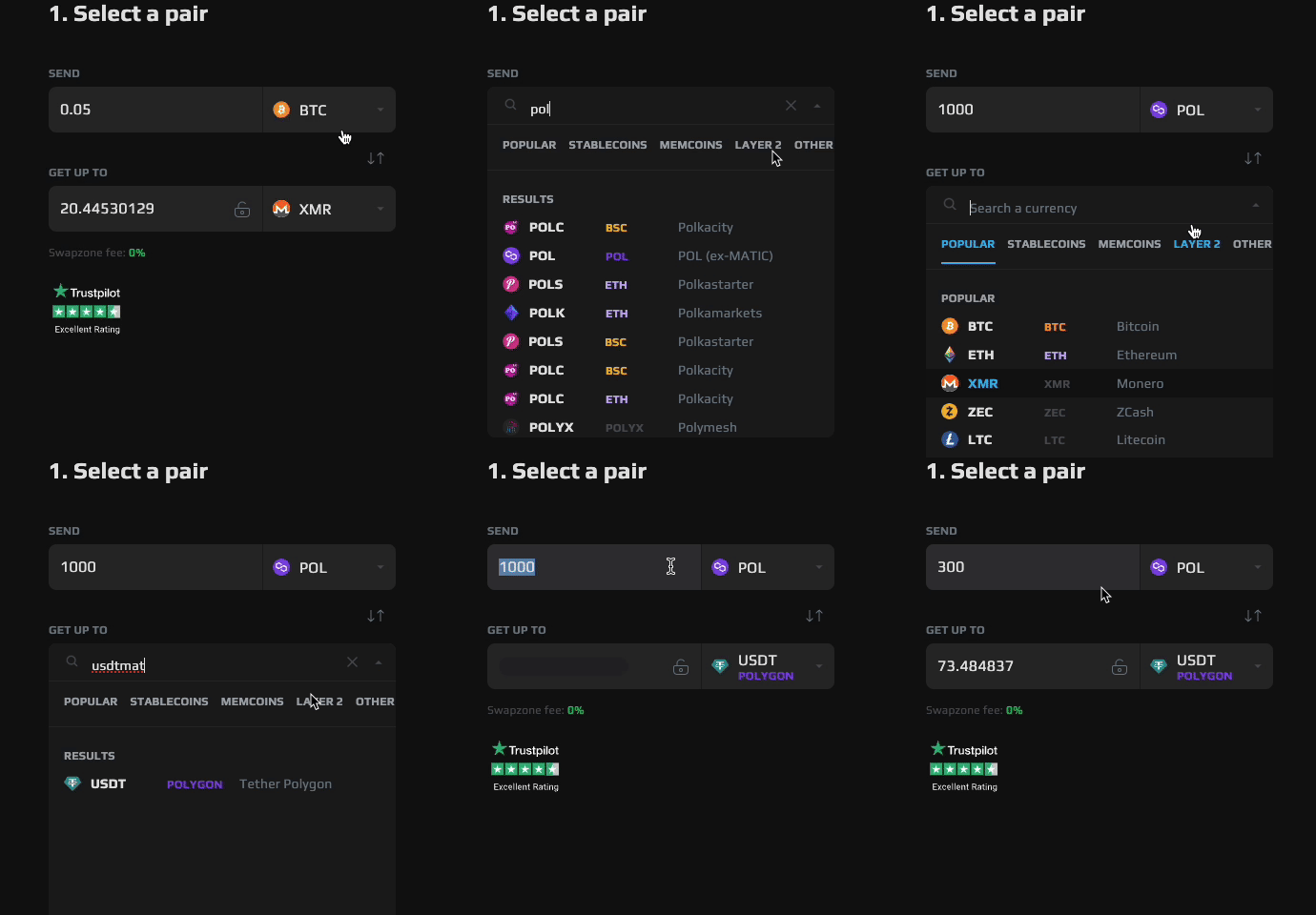
How to Choose a Jupiter Exchange


Jupiter (JUP) Price Analysis

Frequently Asked Questions About Jupiter (JUP)

Jupiter is a DEX aggregator: its routing engine splits an order across multiple liquidity pools to get an optimal price. As of April 2025 it handled about 95% of Solana's DEX aggregator volume and around 80% of on-chain perpetuals trading, according to Blockworks.
They govern the platform's direction, vote on integrations and fee structures, and earn Active Staking Rewards for consistent governance participation.
A January 2025 governance decision that burned 3 billion JUP permanently, cutting the maximum supply from 10 billion to 7 billion, a 30% reduction.
It passed with 75% approval and aims to reduce the net release of future tokens to zero. About 700 million JUP that had been set aside for Jupuary moved to a community cold multisig wallet that cannot be used without a new DAO vote.
An annual airdrop to stakers and active users. The final distribution had its snapshot on January 30, 2026 and totalled 400 million JUP, down from 700 million in the previous cycle.
About 3.32 billion as of October 2026, according to CoinGecko, out of a total supply of about 6.86 billion after burns. The rest is not yet in circulation.
From Jupiter's swap fee revenue. Jupiter has bought back about $70 million of JUP on the open market to offset unlock-related sell pressure, according to BlockchainReporter.
Co-founder Meow's personal allocation is locked until 2030, and 253.47 million JUP unlocked on February 28, 2026 under the published vesting schedule.
Jupiter's liquid staking token for SOL. Perpetuals trading and the LFG Launchpad add more fee-generating surfaces.
Jupiter earns routing fees on every aggregated trade, so Solana trading volume drives the revenue behind ASR payouts and buybacks. When on-chain volume falls, revenue falls with it.
Open swapzone.io/exchange/jupiter, enter the amount, and compare offers from partner exchanges by rate, time, and KYC label. Paste a Solana address, send JUP to the deposit address, and track the order.
Why Exchange Jupiter with Swapzone?

Non-custodial aggregator: you send JUP to the partner's deposit address and receive funds in your own wallet, never through Swapzone.

Live JUP offers from exchange partners side by side.

Swap JUP with 1,600+ cryptocurrencies.

Reviews from TrustPilot


Good and Fast Support
Tyler from Swapzone's Support team was very kind and helps me out proactively. Highly recommend this site.
Excellent and reliable platform
Reliable and easy to use without the cumbersome KYC! Excellent exchange platform.
Quick service
Quick service. Transaction was processed with ease. Thank you Swapzone
Learn More About Cryptocurrencies


Our exchange partners for Jupiter
Contact us for partnership