

Polkadot (DOT) Exchange
Looking to exchange DOT? Swapzone compares live offers from partner exchanges by rate, speed and KYC label. No account, no custody, 0% platform fee. DOT uses SS58 addresses on the Polkadot network.


Swapzone手数料: 0%

Polkadot Market Data & Key Metrics
PricePolkadot Price Chart and Market Analysis
Popular DOT Exchange Pairs


Other Cryptocurrencies to Exchange
 Cardano
 Solana
 GRAM
 Pirate Chain
 DFDV tokenized stock (xStock)
 SP500 tokenized ETF (xStock)
 VELVET
 Pump.fun
 TAG
 Alphabet tokenized stock (xStock)
 GameStop Corp
 Nasdaq tokenized ETF (xStock)
 ZEN
 Cisco tokenized stock (xStock)
 Comcast tokenized stock (xStock)
 Eli Lilly tokenized stock (xStock)
 AstraZeneca tokenized stock (xStock)
Popular Alternatives to Buy

What is DOT?
About Polkadot
DOT is the native token of Polkadot, a Layer 0 metaprotocol designed by Dr. Gavin Wood (Ethereum co-founder and inventor of the Solidity programming language) that underlies a network of interconnected Layer 1 blockchains called parachains. The Relay Chain provides shared security and cross-chain interoperability, while each parachain operates as an independent, application-specific blockchain with its own tokens, governance, and execution logic. Polkadot uses a hybrid consensus combining BABE (block production) and GRANDPA (finality) to achieve 6-second block times following the 2024 Async Backing upgrade. The network can autonomously and forklessly update its own codebase through on-chain governance, meaning upgrades happen through community votes rather than hard forks. On March 14, 2026 Polkadot executed the first issuance reduction under a new supply model approved through OpenGov: a permanent hard supply cap of 2.1 billion DOT and a 53.6% reduction in annual issuance.
DOT tokenomics
DOT's tokenomics were restructured on March 14, 2026 (Pi Day) through OpenGov Referendums #1710 and #1828. Before this change, Polkadot had an uncapped, inflationary supply issuing approximately 120 million DOT annually at 7 to 10% inflation with no maximum supply.
Hard supply cap — 2,100,000,000 DOT (2.1 billion), set by governance in March 2026
Circulating supply — approximately 1.71 billion DOT as of October 2026, according to CoinGecko
Annual issuance (post-March 2026) — approximately 56.88 million DOT, down from 120 million (53.6% reduction); inflation fell to approximately 3.1%
Future reductions — issuance decreases by 13.14% of the remaining supply every two years, following a pi-based formula
Burn mechanisms — 80% of coretime sales revenue plus a portion of transaction fees are burned from circulation, creating deflationary pressure proportional to network usage
DOT utility — governance (voting on network upgrades and treasury spending), staking (securing the Relay Chain; reward rates vary and are published on staking dashboards), and coretime purchases (buying compute resources for parachain operations under the Agile Coretime model)
Institutional access — the 21Shares Polkadot Staking ETF (TDOT) holds DOT and stakes between 40% and 95% of its holdings, according to 21Shares
What determines DOT's value
DOT's value proposition in 2026 rests on three developments: the supply cap, which limits the structural inflation of earlier years; Agile Coretime, which lowers barriers for new projects; and the JAM (Join-Accumulate Machine) upgrade roadmap, which aims to position Polkadot as a decentralized supercomputer supporting RISC-V execution environments beyond WebAssembly.
Agile Coretime replaced the rigid parachain auction system where projects locked large amounts of DOT for two-year slots. Developers now buy compute resources on demand, similar to cloud computing pricing. Elastic Scaling (completed in October 2025) allows a parachain to use multiple Relay Chain cores during traffic spikes. The coretime purchase mechanism creates DOT demand that feeds directly into the burn mechanism, linking ecosystem growth to supply reduction.
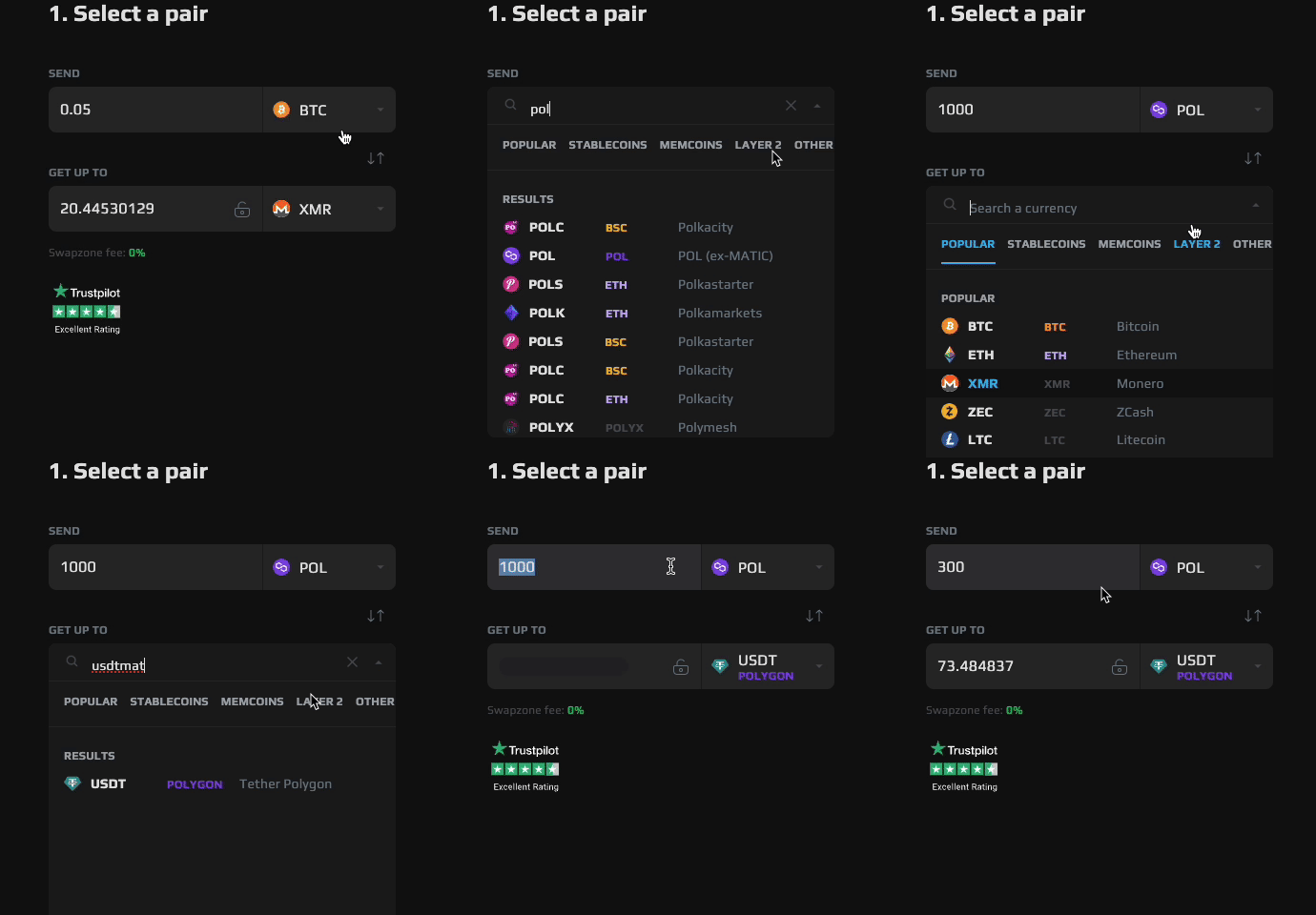
How to Exchange Polkadot on Swapzone

How to Choose a Polkadot Exchange


Polkadot (DOT) Price Analysis

Frequently Asked Questions About Polkadot (DOT)

OpenGov Referendums #1710 and #1828 set a permanent hard supply cap of 2.1 billion DOT and cut annual issuance by 53.6%, from about 120 million DOT to about 56.88 million. Inflation fell to roughly 3.1%.
Issuance decreases by 13.14% of the remaining supply every two years, following a pi-based formula, with the first reduction on March 14, 2026.
80% of coretime sales revenue and a portion of transaction fees are burned. Because coretime is bought with DOT, ecosystem growth feeds directly into supply reduction.
It replaced the parachain auction system, where projects locked large amounts of DOT for two-year slots. Developers now buy compute on demand, similar to cloud pricing, which lowers the cost of getting started.
Completed in October 2025, it lets a parachain use multiple Relay Chain cores during traffic spikes. Together with Agile Coretime it turns Polkadot into a flexible computing platform.
A parachain is an independent, application-specific Layer 1 blockchain with its own tokens, governance, and execution logic. It connects to Polkadot's Relay Chain, which provides shared security and interoperability.
JAM (Join-Accumulate Machine) is a roadmap upgrade positioning Polkadot as a decentralized supercomputer, with RISC-V execution environments beyond WebAssembly. It is a roadmap item, not a live feature.
The network can update its own codebase autonomously and forklessly through on-chain governance, so upgrades pass by community vote. DOT holders vote on all network upgrades and treasury spending.
Vote in governance, stake to secure the Relay Chain (reward rates vary and are published on staking dashboards), and buy coretime for parachain operations. The 21Shares Polkadot Staking ETF (TDOT) offers regulated exposure.
DOT uses Substrate-based SS58 addresses, alphanumeric strings starting with 1. Never send it to an Ethereum 0x address or a Bitcoin address, since the funds may be lost. Deposits to centralized exchanges may also need a MEMO.
Open swapzone.io/exchange/polkadot, enter the amount, and compare offers from partner exchanges. Paste your SS58 address, send DOT to the deposit address (add a MEMO if shown), and track the order.
Polkadot is a Layer-0 multichain network created by Ethereum co-founder Gavin Wood and developed by Parity Technologies. DOT is its native token used for staking, governance, and bonding new parachains (specialized blockchains that connect to the Polkadot relay chain). Polkadot's core design allows independent blockchains (parachains) to share security and communicate with each other through the relay chain without needing their own validator sets. The relay chain itself does not support smart contracts; that functionality lives on parachains like Moonbeam or Acala. Maximum DOT supply is capped at 2.1 billion since the March 2026 tokenomics change, with approximately 1.71 billion DOT in circulation as of October 2026, according to CoinGecko.
DOT serves three functions on Polkadot. Governance: DOT holders vote on runtime upgrades, parachain slot auctions, and treasury spending. Staking: validators and nominators bond DOT to secure the relay chain and earn staking rewards. Bonding: projects bid DOT in parachain slot auctions to secure a slot on the relay chain for up to 96 weeks. DOT bonded in auctions is locked (not burned) and returned when the lease expires. This bonding demand is why crowdloans exist, where projects raise DOT from community members who lock their tokens for the project's auction bid.
Polkadot uses SS58-encoded addresses, which are Base58-encoded strings that typically begin with the number 1 for Polkadot mainnet addresses. These addresses are not compatible with Ethereum or Bitcoin wallets. Polkadot-native wallets include Polkadot.js extension, Talisman, SubWallet, and Nova Wallet. Hardware wallet support is available via Ledger's Polkadot app. Polkadot requires a minimum account balance (existential deposit, currently 1 DOT) to keep an address active; sending the full balance will delete the account.
Why Exchange Polkadot with Swapzone?

Non-custodial aggregator: you send DOT to the partner's deposit address and receive funds in your own wallet, never through Swapzone.

Live DOT offers from exchange partners side by side.

Swap DOT with 1,600+ cryptocurrencies.

Reviews from TrustPilot


Good and Fast Support
Tyler from Swapzone's Support team was very kind and helps me out proactively. Highly recommend this site.
Excellent and reliable platform
Reliable and easy to use without the cumbersome KYC! Excellent exchange platform.
Quick service
Quick service. Transaction was processed with ease. Thank you Swapzone
Learn More About Cryptocurrencies


Our exchange partners for Polkadot
Contact us for partnership