

Celestia (TIA) Exchange
Looking to exchange TIA? Swapzone compares live offers from partner exchanges by rate, speed and KYC label. No account, no custody, 0% platform fee. TIA is the native coin of the Celestia network, whose addresses start with celestia1.


Swapzone 手续费:0%

Celestia Market Data & Key Metrics
PricePopular TIA Exchange Pairs


Other Cryptocurrencies to Exchange
 Cardano
 Solana
 GRAM
 Pirate Chain
 Propy
 NULS
 Dragon
 CyberMiles
 Bread
 Chatcoin
 Credits
 FC Barcelona Fan Token
 Zilliqa
 UTRUST
 Telcoin
 Kin
 IOST
 pNetwork
Popular Alternatives to Buy

What is TIA?
About Celestia
TIA is the native token of Celestia, a modular data availability network built on Cosmos SDK and CometBFT proof-of-stake consensus that provides ordering and data availability guarantees for rollups and app-chains — without handling execution. Validators and delegators earn staking rewards for securing Celestia's consensus layer, while rollup developers pay fees denominated in TIA to post transaction data blobs to the network — not a monolithic smart contract platform, not a general-purpose Layer 1.
TIA tokenomics
Celestia uses an inflationary supply model with a declining emission schedule rather than a fixed hard cap. Genesis supply was set at 1,000,000,000 TIA, with inflation beginning at 8% annually and decreasing by 10% per year until reaching a floor of 1.5%, according to Celestia's official documentation. About 987.6 million TIA were in circulation as of October 30, 2026, according to CoinGecko, against a total supply of about 1.18 billion TIA that includes inflation since genesis. Since the Matcha upgrade went live in November 2025, annual inflation has been approximately 2.5%.
Genesis supply — 1,000,000,000 TIA; inflation above this baseline adds supply at a controlled declining rate, with a long-term floor of 1.5% annual inflation
Circulating supply — approximately 987.6 million TIA as of October 30, 2026, according to CoinGecko; the remaining locked portion releases through vesting schedules concluding in September 2027
Inflation distribution — newly minted TIA flows to validators, delegators, and the community pool; the community pool receives 2% of all block rewards, governed by TIA staker votes
Genesis allocation — split across R&D & Ecosystem, Public Allocation, Early Backers (Seed and Series A&B), and Initial Core Contributors; a single vesting event completed in April 2026, releasing 175.6 million TIA (17.2% of genesis supply) to seed investors, Series A/B participants, and core contributors
Vesting end — full vesting concludes in September 2027
Staking — all TIA, including locked tokens, may be staked; staking both secures the network and grants governance participation rights
What determines TIA's value
TIA's primary usage-driven demand comes from rollup developers paying fees to post data blobs to Celestia — each transaction batch submitted by a rollup requires a TIA-denominated payment, creating a direct link between modular blockchain adoption and token demand. Rollups across DeFi, cross-chain settlement, and real-world asset categories have deployed on top of Celestia. Each active rollup posting data generates ongoing fee demand rather than one-time token consumption, making ecosystem growth the direct mechanical driver of TIA's utility demand.
Celestia Vision 2.0 and the Fibre upgrade, announced in January 2026, targets up to 1 Tb/s of blockspace throughput — sufficient, according to Celestia's documentation, to bring every market on-chain at scale. If delivered, this raises the theoretical ceiling on the volume of rollup data that can be posted per second, and therefore the volume of TIA fees the network can absorb. The Matcha upgrade, live since November 2025, scales blocks towards 128 MB and cut annual inflation from 5% to approximately 2.5%.
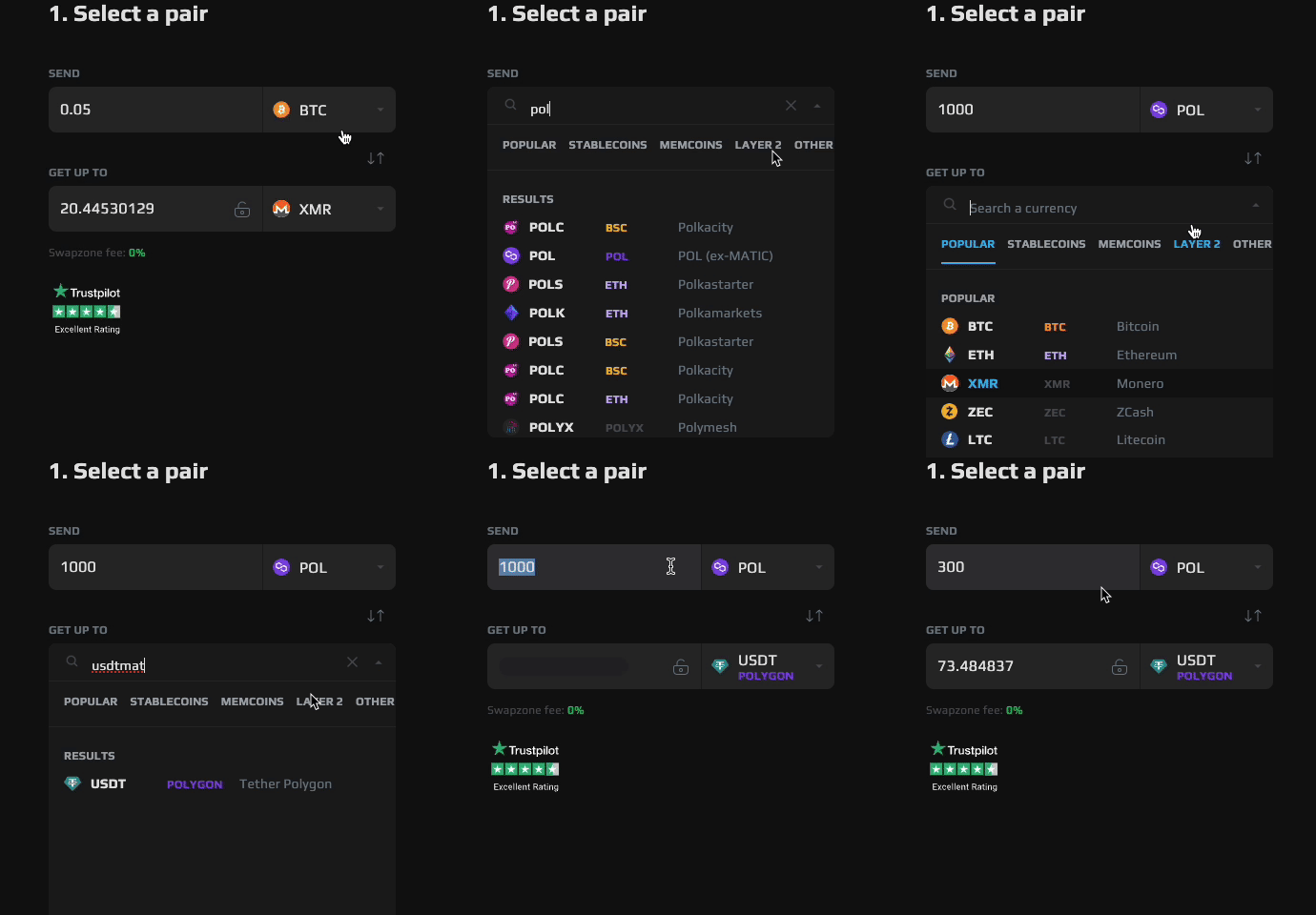
How to Exchange Celestia on Swapzone

How to Choose a Celestia Exchange


Celestia (TIA) Price Analysis

Frequently Asked Questions About Celestia (TIA)

It provides ordering and data availability for rollups and app-chains without handling execution. Rollups post their transaction data to Celestia instead of running their own consensus.
Rollup developers pay fees denominated in TIA to post data blobs to the network, so each batch a rollup submits creates fee demand.
No. Genesis supply was 1 billion TIA and inflation starts at 8% a year, falling by 10% annually to a 1.5% floor, according to Celestia's documentation. After the Matcha upgrade in November 2025, inflation is approximately 2.5%.
An upgrade (v6) that went live on the Celestia mainnet in November 2025. It scales blocks towards 128 MB and cut annual inflation from 5% to approximately 2.5%.
Newly minted TIA goes to validators, delegators, and the community pool, which receives 2% of block rewards and is governed by TIA staker votes.
About 987.6 million as of October 30, 2026, according to CoinGecko. The rest releases through vesting that concludes in September 2027.
A single vesting event: 175.6 million TIA, 17.2% of genesis supply, released to seed investors, Series A and B participants, and core contributors.
Full vesting concludes in September 2027.
Yes. All TIA, including locked tokens, may be staked, which secures the network and gives governance participation rights.
A protocol announced in January 2026 with Celestia Vision 2.0 that targets up to 1 Tb/s of blockspace throughput.
Open swapzone.io/exchange/celestia, enter the amount, and compare offers from partner exchanges by rate, time, and KYC label. Paste a celestia1 address, send TIA to the deposit address with the MEMO if shown, and track the order.
Why Exchange Celestia with Swapzone?

Non-custodial aggregator: you send TIA to the partner's deposit address and receive funds in your own wallet, never through Swapzone.

Live TIA offers from exchange partners side by side.

Swap TIA with 1,600+ cryptocurrencies.

Reviews from TrustPilot


Good and Fast Support
Tyler from Swapzone's Support team was very kind and helps me out proactively. Highly recommend this site.
Excellent and reliable platform
Reliable and easy to use without the cumbersome KYC! Excellent exchange platform.
Quick service
Quick service. Transaction was processed with ease. Thank you Swapzone
Learn More About Cryptocurrencies


Our exchange partners for Celestia
Contact us for partnership