


 Solana
 GRAM
GRAM Pirate Chain
 Game7
Game7 MMT
MMT Banana For Scale
 Babylon
 Kekius Maximus (kekiusmaximus.vip)
 tokenbot
 DRV
DRV Avalon Labs (AVL)
 CZ'S Dog (broccoli.gg)
 MyShell
 Heima
Heima DIAM
DIAM Story
Story KAITO
KAITO
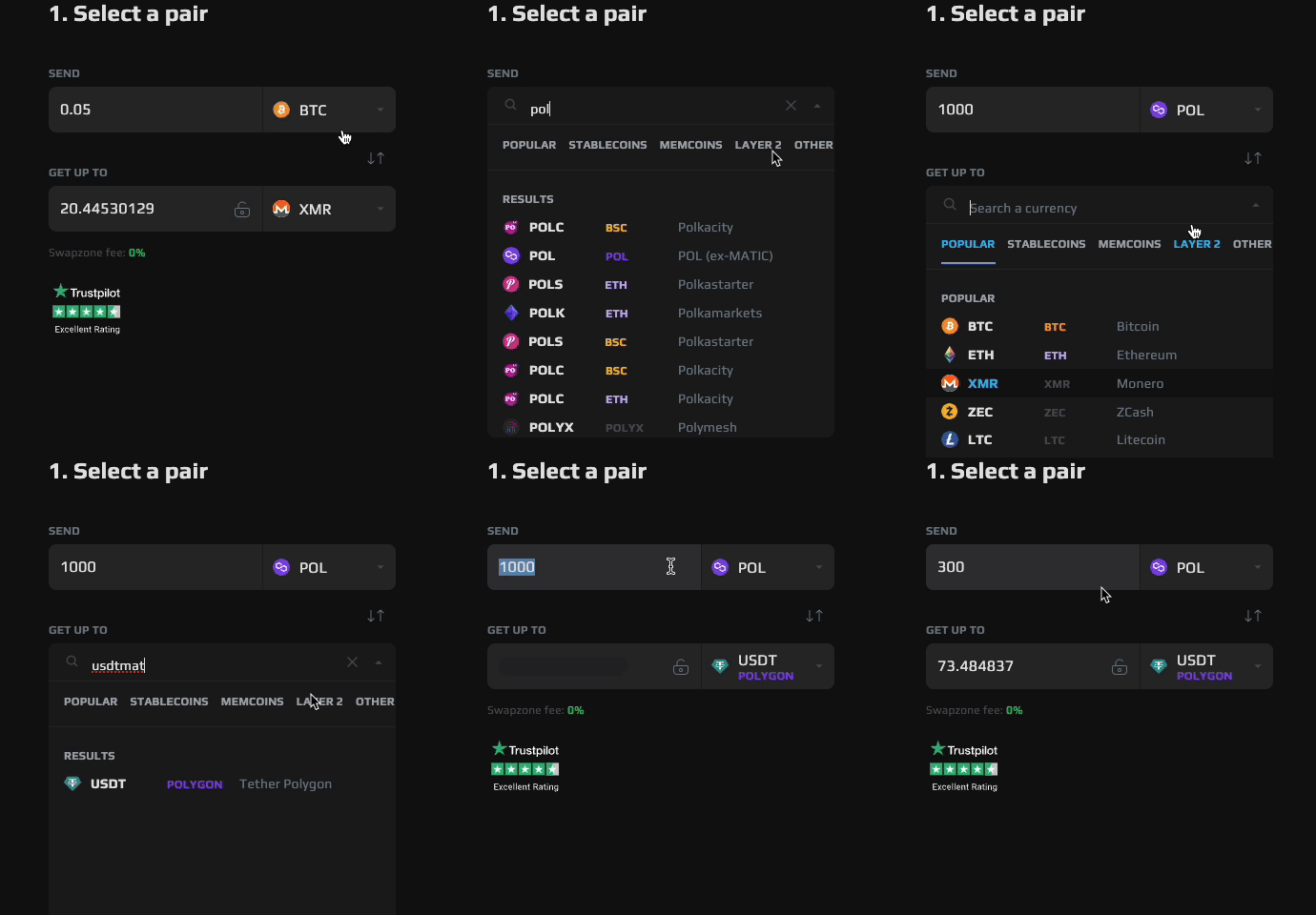

You can exchange crypto without going through KYC (Know Your Customer)
Monero (XMR) Exchange
Exchange XMR instantly and with 0% platform fees. Swapzone aggregates real-time rates, transaction speeds, and provider ratings, giving you the full picture before you convert. Compare, choose, and swap safely 1600+ supported cryptocurrencies.
send

xmr

get

Swapzone fee: 0%

Monero Market Data & Key Metrics
Price$ 554.29
24h % price
-2.65%
7d % price
-6.01%
Market Cap
$ 10,426,000,834.20
24h volume
$ 95,633,771.15
Coin supply
18,809,722.289
Monero Price Chart and Market Analysis
The current exchange rate for XMR is 550.8675723281152$. Over the last 24h, the price of XMR has shown a decrease of 2.6%. This data is provided by our real-time converter.Given the volatility of XMR prices across different blockchains, it's essential to stay informed. The chart below provides historical data and trends for XMR, helping you track its performance over time. Use this information to make data-driven decisions when exchanging crypto on Swapzone.
xmrUSD
550.8676
-2.6%(-14.72)
xmrby CoinGecko
Popular XMR Exchange Pairs
Exchange XMR ForPairsStatus
Other Cryptocurrencies Exchange Pairs
BitcoinbtcEthereumethZCashzecLitecoinltcXRPxrpTetherusdtStellarxlmTRONtrxUSD CoinusdcCardanoadaSolanasolGRAMtonPirate ChainarrrUSDCEusdceopGame7g7MMTmmtMidnightnightBanana For Scalebananas31BabylonbabyKekius Maximus (kekiusmaximus.vip)kekiustokenbotclankerDRVdrvAvalon Labs (AVL)avlCZ'S Dog (broccoli.gg)broccoliMyShellshellerc20Heimaheierc20DIAMdiamStoryipKAITOkaito
Popular Alternatives to Buy

What is a XMR?
Monero (XMR) is a decentralized coin with the most advanced privacy features on the market. Transaction details are confidential by default through privacy technologies such as ring signatures, stealth addresses, and confidential transactions. For traders, Monero’s appeal is tied to financial privacy. Users may buy Monero, sell XMR, or trade Monero when they want more financial independence.
Tokenomics of XMR
Monero's tokenomics are built around Proof-of-Work (ASIC-resistant and CPU-friendly) mining and long-term network security. Miners help validate transactions and keep the network decentralized while earning rewards. Unlike Bitcoin, Monero does not rely on a hard supply cap or recurring halving events. Instead, it uses a tail-emission model.
Key Features of Monero
Monero’s main feature is uncompromised privacy. You as a user do not need to turn on a special privacy mode. XMR has a long history and consistent demand, but privacy coins face more regulatory pressure than other crypto assets. As a result, Monero is available on selected exchanges and swap services. The support is limited in some highly regulated countries. So, the market depth is very different across platforms and pairs, especially for larger trades.
Stepwise Guide to Swapping XMR
How to Choose the Best XMR Exchange Platform
Are there a lot of instant crypto exchange services across the internet? Yes. You have to consider numerous factors when trying to choose the best Monero exchange—XMR price, fees, speed, ratings, and KYC policies. The process might seem too complicated, but you are not alone here. Swapzone will help. We display all the info needed to exchange Monero at the best rate, fast and through a trustworthy exchange platform, so that you can make a non-custodial swap with no registration.
By best rates
By the highest transaction speed
By best rating
On Swapzone, you can opt for the most profitable exchange deal on the crypto market. To do that, sort available Bitcoin offers by rates by clicking on the Best Rate button above the offers. The most favorable XMR exchange rate will be listed at the top with a green Best Rate label next to its exchange provider.
Monero (XMR) Price Prediction
Monero (XMR) is the leading privacy-by-default cryptocurrency, where sender, receiver, and transaction amount are all confidential through RingCT, Stealth Addresses, and Ring
Signatures — making every XMR transaction private without any opt-in required. Its price is particularly sensitive to exchange listing and delisting events, evolving global regulatory stances on privacy assets, and organic on-chain transaction volume. The Seraphis protocol upgrade represents the next significant development milestone for the network.
No Monero price prediction is guaranteed. XMR is volatile and subject to regulatory-driven exchange delistings that can affect liquidity rapidly. Always assess current market conditions and do your own research before making any financial decision.Disclaimer: This content is for informational purposes only and does not constitute financial or investment advice. Swapzone is a non-custodial exchange aggregator; we compare rates across providers, not predict markets.
Signatures — making every XMR transaction private without any opt-in required. Its price is particularly sensitive to exchange listing and delisting events, evolving global regulatory stances on privacy assets, and organic on-chain transaction volume. The Seraphis protocol upgrade represents the next significant development milestone for the network.
No Monero price prediction is guaranteed. XMR is volatile and subject to regulatory-driven exchange delistings that can affect liquidity rapidly. Always assess current market conditions and do your own research before making any financial decision.Disclaimer: This content is for informational purposes only and does not constitute financial or investment advice. Swapzone is a non-custodial exchange aggregator; we compare rates across providers, not predict markets.
Frequently Asked Questions About Monero Exchange
What is Monero (XMR)?
Monero (XMR) is a cryptocurrency, a digital asset that exists on a decentralized blockchain network. You can send, receive, and trade XMR without relying on banks or traditional financial institutions. Ethereum pairs with thousands of other cryptocurrencies, making it easy to swap XMR for assets like BTC, ETH, USDT, and more on exchanges worldwide.
How do I swap Monero for another cryptocurrency?
Select the trading pair you want – for example, XMR to XMR) or XMR) to USDT. Enter the amount you'd like to exchange, provide your receiving wallet address, and confirm the rate (including any fees). The platform handles the conversion automatically. On aggregator services, you can compare offers from multiple providers before choosing the best rate for your swap.
Can I convert Monero to fiat currency?
Yes, if your exchange supports fiat withdrawals. Select XMR) as your source currency and choose your target fiat (USD, EUR, GBP, etc.). Provide your bank details or select an alternative payment method like PayPal or card withdrawal. Processing times vary from instant to several business days depending on the withdrawal method and amount. Larger transactions may require identity verification.
What security features should I look for in a Monero exchange?
Prioritize platforms that store 90%+ of user funds in cold storage (offline wallets). Look for two-factor authentication options – hardware keys like YubiKey offer stronger protection than SMS verification. Check for SSL encryption, regular third-party security audits, and insurance coverage. Transparent incident reporting and a solid track record matter too. On aggregator platforms, you can also check partner ratings and user reviews before selecting an exchange.
What is the difference between a centralized and decentralized Monero exchange?
Centralized exchanges (CEX) operate like traditional platforms – they hold custody of your funds, require account registration, and often need KYC verification. They typically offer deeper liquidity and fiat on-ramps. Decentralized exchanges (DEX) use smart contracts for peer-to-peer swaps without custody – you keep control of your private keys throughout the transaction. DEXs offer more privacy but require careful wallet management since lost keys mean lost funds
How do network fees affect Monero transactions?
Network fees are the cost of processing transactions on the Monero blockchain. Every time you send XMR) or execute a swap, validators (or miners) charge a fee for confirming your transaction. Fee amounts depend on network congestion – high traffic means higher fees, off-peak hours mean lower costs (sometimes 50–70% less). Exchange platforms typically add their own fee (0.25–2%) on top of network costs. Aggregators like Swapzone show estimated total fees upfront across 20+ providers, helping you find the most cost-effective option.
What factors influence the Monero exchange rate?
XMR) exchange rates depend on platform liquidity, trading volume, market maker spreads, and real-time demand. Rates can vary by 0.5–3% between platforms for identical transactions due to different liquidity sources. Network congestion, regional price differences, and market volatility also create slippage. Using an aggregator that compares rates from 20+ exchanges helps you find the best available price at any given moment.
How do I find the best Monero exchange?
Evaluate platforms based on security track record, fee transparency (typical range: 0.5–2%), available trading pairs, and transaction speed (usually 5–30 minutes). Check user reviews and regulatory compliance. For the most efficient approach, use exchange aggregators that display real-time rates from multiple providers—this lets you compare options by price, speed, and partner reliability without visiting each platform individually.
Why Exchange Monero with Swapzone?
Higher security
We check all exchangers for the risk of freezing funds. Your funds will definitely reach you!

Best rates
We're showing the offers from the most popular and reliable exchange providers. Pick the best offer for your crypto pair!

3000+ currencies available
It's really hard not to find the crypto you need on Swapzone :)

Reviews from TrustPilot

TrustPilot 4.7 |536 reviews


Good and Fast Support
Tyler from Swapzone's Support team was very kind and helps me out proactively. Highly recommend this site.
Excellent and reliable platform
Reliable and easy to use without the cumbersome KYC! Excellent exchange platform.
Quick service
Quick service. Transaction was processed with ease. Thank you Swapzone
Learn More About Cryptocurrencies

How to Exchange Crypto Without Verification
Crypto Exchange API
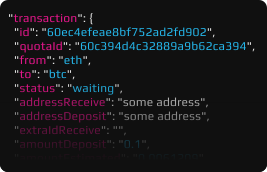
Enable crypto swaps, staking, loans, and fiat in your app—without building 30 integrations.
Crypto Wallet Security Tips
Why Should You Really Care About Bitcoin and Crypto Security?

Hidden Fees in Crypto: Why You Pay More Than You See
Uncover the hidden costs of crypto trades, from spreads to slippage, and learn how to minimize them
Our Exchange Partners for Monero (XMR)
Contact us for partnership