

PayPal USD (PYUSD) Exchange
PYUSD is a fiat-backed stablecoin issued by PayPal and Paxos Trust Company, pegged 1:1 to the US dollar and backed by US dollar deposits, short-term US Treasuries, and similar cash equivalents — the first stablecoin issued by a major US payments company.


Swapzone 手续费:0%

PayPal USD Market Data
 Price
PricePYUSD Price Chart

Popular PYUSD Exchange Pairs


Other Cryptocurrencies to Exchange
 Cardano
 Solana
 GRAM
GRAM Pirate Chain
 SNX
SNX TRB
TRB SAND
SAND TUSD
TUSD UMA
UMA WazirX
 YFI
YFI Alchemy Pay
 NMR
NMR Alien Worlds
 Coin98
 Linear Finance
 AUDIO
AUDIO dKargo
Popular Alternatives to Buy

What Is PayPal USD (PYUSD)?
What Is PYUSD?
PYUSD is a fiat-backed stablecoin issued by PayPal in partnership with Paxos Trust Company, pegged 1:1 to the US dollar. It launched in August 2023 on Ethereum as the first stablecoin issued by a major US payments company. In May 2024, PYUSD expanded to Solana, giving it significantly faster settlement and lower transaction fees. PayPal customers can acquire PYUSD directly in the PayPal app and spend it through PayPal's payment network, creating a fiat on-ramp and merchant acceptance channel.
PYUSD Supply and Reserve Model
PYUSD uses a fully reserved model managed by Paxos Trust Company under a New York Department of Financial Services (NYDFS) trust charter — the same regulatory framework that governs Paxos-issued USDP.
Reserve assets — US dollar deposits, short-term US Treasuries, and similar cash equivalents
Issuer — Paxos Trust Company under New York DFS regulation
Attestations — monthly reserve attestations published by independent accountants
Chains — ERC-20 on Ethereum; SPL token on Solana; native issuance also on Arbitrum and Stellar as of August 2026, according to Allium; PYUSD0 extends it to other networks via LayerZero
Supply model — elastic; minted when PayPal customers fund their accounts with PYUSD, burned when they cash out
Circulating supply — exceeded $1 billion in April 2024 after Solana launch; growth driven by PayPal/Venmo in-app integration
Freeze capability — as an ERC-20 token, PYUSD includes freeze and wipe functions controllable by Paxos, consistent with NYDFS regulatory requirements for law enforcement compliance
PayPal integration — available to verified PayPal and Venmo users in the United States; used for checkout, peer-to-peer payments, and fund transfers within the PayPal ecosystem
What Determines PYUSD's Demand
PYUSD's unique demand driver is PayPal's existing payment infrastructure. With 439 million PayPal active accounts in Q2 2026, according to PayPal's earnings release, PYUSD has a built-in fiat-to-crypto gateway and point-of-sale acceptance network. However, many PayPal users who hold PYUSD via the app do not withdraw it to self-custody wallets — which limits on-chain circulating supply relative to total PayPal-custodied holdings. On-chain, PYUSD competes with USDC and USDT for DeFi liquidity and integration. Solana deployment added access to Solana Pay merchants and lower-cost settlement for high-frequency transactions. Regulatory posture is a strength: NYDFS charter oversight and regular attestations place PYUSD in a high-compliance category relative to less-regulated stablecoins.
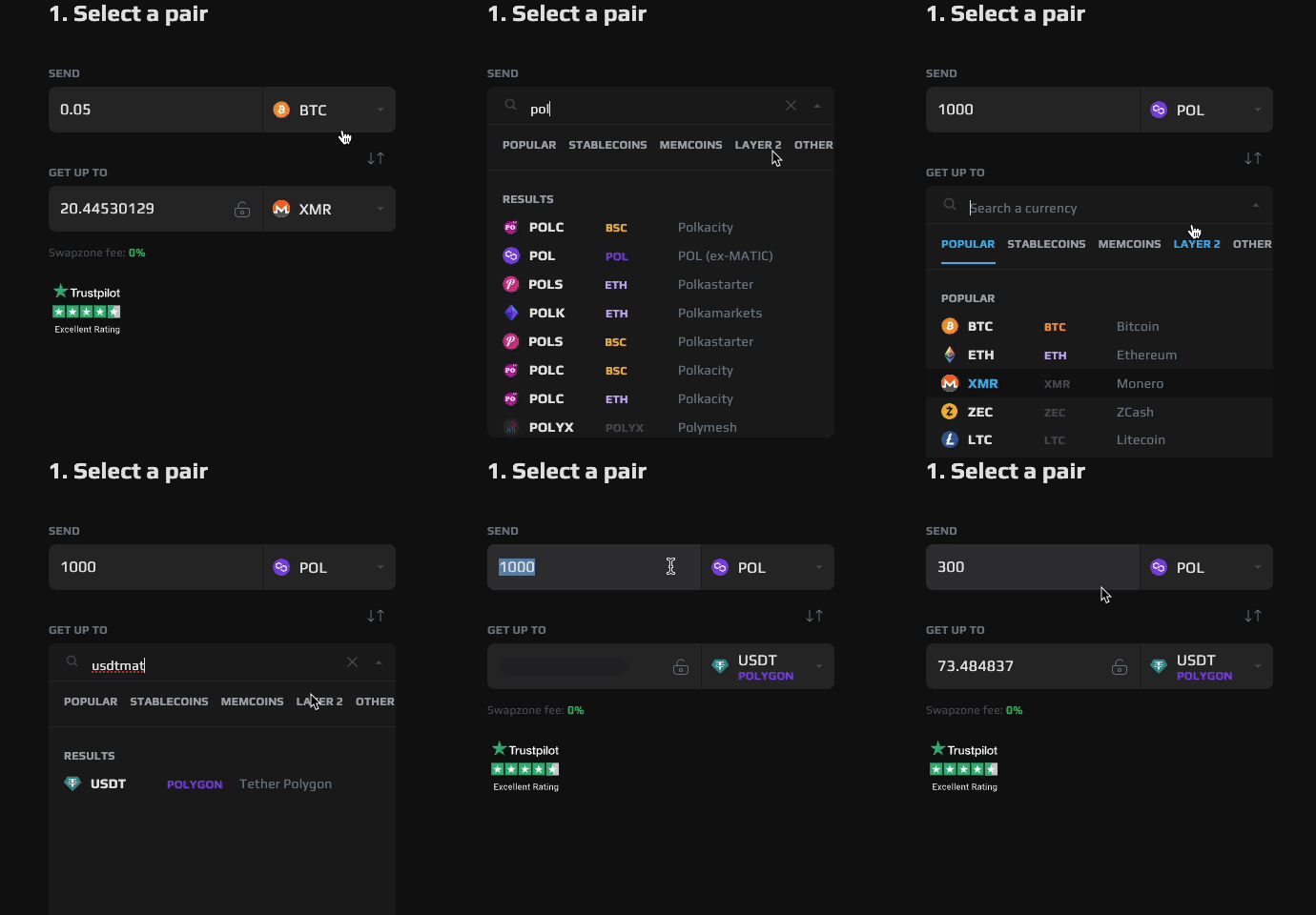
How to Exchange PYUSD on Swapzone

How to Choose a PYUSD Exchange Partner


PayPal USD (PYUSD) Analysis

Frequently Asked Questions About PayPal USD (PYUSD)

PYUSD is a fiat-backed stablecoin issued by PayPal in partnership with Paxos Trust Company. It launched in August 2023 on Ethereum and expanded to Solana in May 2024. It is regulated by the New York Department of Financial Services (NYDFS) under Paxos's trust charter — the same regulatory framework that governs other Paxos-issued stablecoins.
PYUSD's primary differentiator is PayPal's payments infrastructure. PayPal reported 439 million active accounts in Q2 2026, according to its earnings release. PYUSD can be spent at these merchants through PayPal checkout and used for peer-to-peer payments via Venmo. This gives PYUSD a direct consumer-to-merchant payment use case that USDC and USDT do not offer in the same form.
Yes. PYUSD launched on Solana in May 2024 as a Solana Program Library (SPL) token. Solana transactions confirm in under a second with fees under $0.001, making Solana PYUSD well-suited for high-frequency payments and micropayments. The Solana expansion also gave PYUSD access to Solana Pay merchant integrations.
PYUSD is backed by US dollar deposits, short-term US Treasuries, and similar cash equivalents held by Paxos Trust Company. Monthly reserve attestations by independent accountants verify that the total backing equals or exceeds the circulating supply. Reserves are held under NYDFS regulatory oversight, which requires maintaining adequate capital and liquidity.
Yes. PYUSD's smart contract includes freeze and wipe functions that allow Paxos to freeze tokens at specific addresses or wipe token balances in compliance with law enforcement orders. This is consistent with NYDFS regulatory requirements for licensed money transmitters operating in New York. The same freeze capability exists in USDC and was used by Circle in the Tornado Cash sanction case in August 2022.
Yes. Verified PayPal users in the United States can transfer PYUSD from their PayPal account to an external Ethereum or Solana wallet address. This gives users the option to move PYUSD to DeFi protocols or hold it in self-custody. However, many PayPal users holding PYUSD keep it within the PayPal app rather than withdrawing it on-chain.
PYUSD circulating supply exceeded $1 billion in April 2024, shortly after the Solana launch in May 2024 expanded liquidity and access. The Solana deployment opened PYUSD to Solana-native DeFi protocols and Solana Pay merchant integrations, broadening the on-chain use cases beyond Ethereum.
PayPal processes payments for merchants worldwide. PayPal customers with PYUSD in their accounts can use it at these merchants through standard PayPal checkout — the merchant receives whatever currency they accept, while the buyer uses PYUSD from their PayPal balance. This creates a practical spending use case for a stablecoin that does not require the merchant to set up a crypto wallet.
PYUSD is available to PayPal users in the United States and, according to PayPal, in a growing number of other markets. International PayPal customers may be able to receive PYUSD from on-chain transactions, but availability of in-app PYUSD funding and spending features varies by country and changes over time. Check PayPal's current regional availability before expecting in-app PYUSD access from outside the US.
PayPal contracted Paxos Trust Company to issue and manage PYUSD's reserves. Paxos is the technical issuer under its NYDFS trust charter. PayPal is the commercial partner — it provides the user-facing product, merchant integration, and brand. If PayPal were to discontinue PYUSD, Paxos's regulatory obligations would still require that existing token holders can redeem their PYUSD for US dollars at par.
Go to swapzone.io/exchange/paypal-usd, enter the PYUSD amount you want to send or receive, and compare live offers from exchange partners. Each offer shows the rate, estimated completion time, and KYC frequency label. Select the offer, enter your destination wallet address, and send PYUSD to the deposit address provided. No registration is required on Swapzone.
Why Exchange PYUSD on Swapzone

Non-custodial aggregator — PYUSD goes directly to your wallet, never through Swapzone

Live PYUSD offers from exchange partners side by side.

Exchange PYUSD against 1,800+ cryptocurrencies

PayPal USD Reviews on Trustpilot


Good and Fast Support
Tyler from Swapzone's Support team was very kind and helps me out proactively. Highly recommend this site.
Excellent and reliable platform
Reliable and easy to use without the cumbersome KYC! Excellent exchange platform.
Quick service
Quick service. Transaction was processed with ease. Thank you Swapzone
Learn More About Cryptocurrencies



Our Exchange Partners
Contact us for partnership