

Compound (COMP) Exchange
Looking to exchange COMP? Swapzone compares live offers from partner exchanges by rate, speed and KYC label. No account, no custody, 0% platform fee. COMP is an ERC-20 token on Ethereum, the governance token of Compound, a decentralized lending protocol.


Swapzone fee: 0%

Compound Market Data & Key Metrics
PricePopular COMP Exchange Pairs


Other Cryptocurrencies to Exchange
 Cardano
 Solana
 GRAM
 Pirate Chain
 Trane Technologies Plc
 DEAPcoin
 StreamCoin
 QATAR 2022 TOKEN FWC
 Hashflow
 Marvin Inu
 Elastos
 Beacon ETH
 dForce
 ELF
 MANTRA
 BENQI
 UniLend
Popular Alternatives to Buy

What is COMP?
About Compound
COMP is the governance and reward token of Compound, a decentralized lending protocol that pioneered algorithmic money markets on Ethereum when it launched in 2018. Founded by Robert Leshner, Compound allows users to deposit crypto assets into smart-contract-managed pools to earn interest and to borrow against deposited collateral without credit checks, applications, or banking intermediaries. Interest rates adjust algorithmically every Ethereum block (approximately every 12 seconds) based on pool utilization. Compound V3, codenamed Comet and released in August 2022, replaced the shared multi-asset pool model of V2 with a single-borrowable-asset-per-market architecture: each Comet deployment lets users borrow one base asset (USDC, ETH, USDT, or USDS) against multiple collateral types, isolating risk so that a problem with one collateral asset cannot cascade into other markets. As of November 2026, Compound's total value locked was about $1.4 billion across Ethereum and several Layer 2 networks, according to DeFiLlama. Compound's open-source codebase has been widely forked, and many lending projects on multiple chains build on it.
COMP tokenomics
COMP has a fixed maximum supply of 10 million tokens with no inflationary minting, making it one of the lowest-supply governance tokens in DeFi relative to the protocol's TVL and age.
Maximum supply — 10,000,000 COMP (10 million, fixed)
Circulating supply — CoinGecko lists all 10 million COMP as circulating as of November 2026
Governance — COMP holders vote on all protocol parameters including collateral types, interest rate models, liquidation thresholds, COMP reward distribution rates, and new Comet market deployments; governance proposals require a minimum threshold of COMP to submit and a quorum of staked tokens to pass
Reward distribution — each Comet market streams COMP rewards to suppliers, borrowers, or both at rates set by governance
Risk isolation — Compound V3's single-base-asset design eliminates cross-asset contagion risk; collateral stays isolated in the contract rather than entering a shared pool, giving each market independent risk parameters and liquidation curves
Multi-chain deployment — Ethereum (flagship) and several Layer 2 and sidechain networks; governance operates from Ethereum mainnet with cross-chain message passing for parameter updates
What determines COMP's value
COMP's value derives from governance control over a protocol with about $1.4 billion in lending TVL as of November 2026. Every parameter change (which assets are accepted as collateral, what interest rate curves look like, how COMP rewards are distributed, which new chains receive Comet deployments) passes through COMP governance, giving token holders direct influence over one of DeFi's most established financial systems.
Compound's competitive position in 2026 faces pressure from Aave, which holds substantially more TVL, operates on more chains, offers flash loans, and launched its own stablecoin (GHO). Compound's V3 architecture is designed to isolate risk (the single-borrowable-asset market design limits the cross-asset liquidation cascades that monolithic pool models face), but Aave has built a broader product surface. The fixed 10 million COMP supply means no dilutive inflation, and the wide forking of its codebase shows that developers consider the architecture production-ready. Whether Compound can narrow the TVL gap with Aave through RWA integration, new Comet markets, and continued L2 expansion determines COMP's trajectory relative to competing DeFi governance tokens.
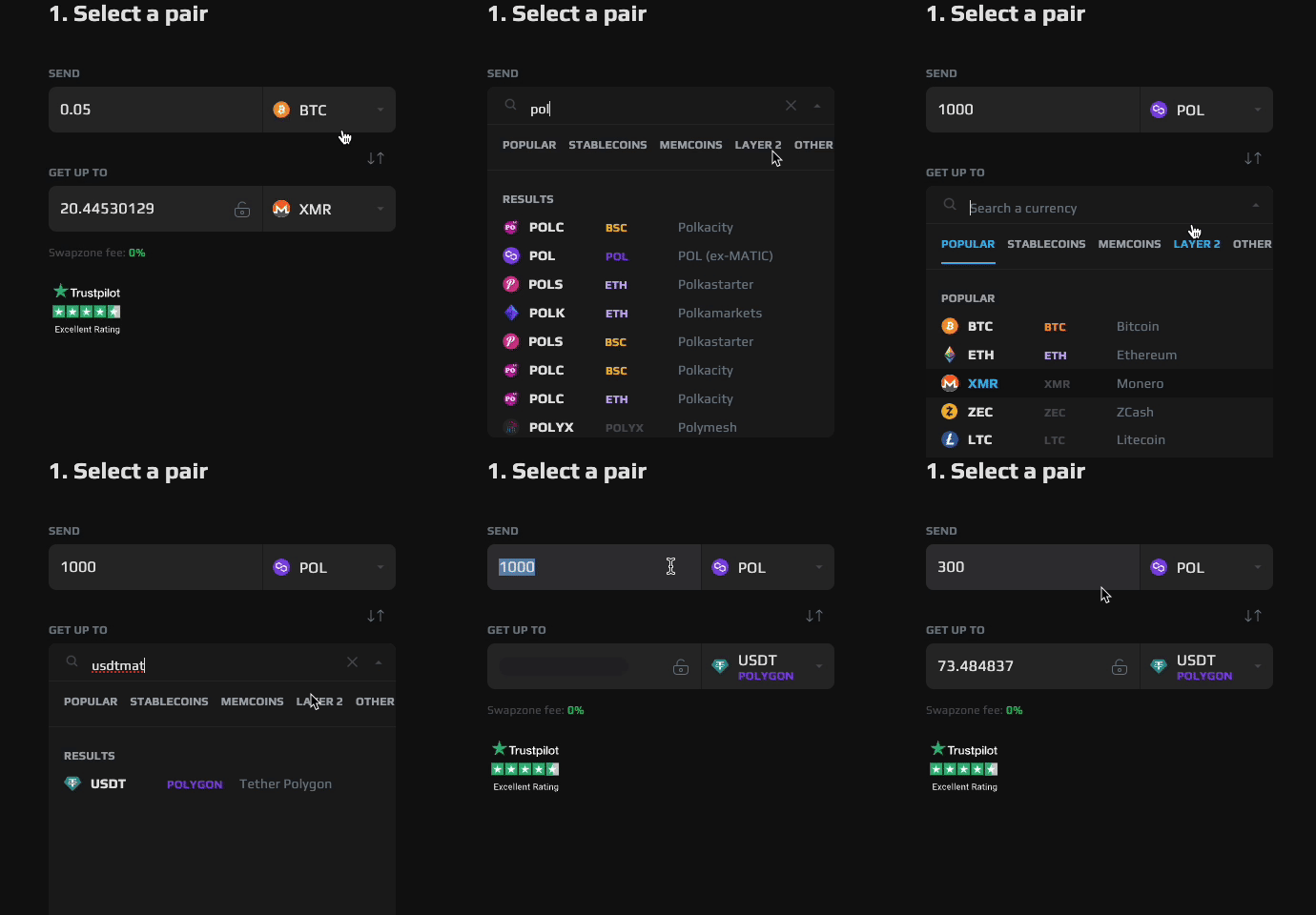
How to Exchange Compound on Swapzone

How to Choose a Compound Exchange


Compound (COMP) Price Analysis

Frequently Asked Questions About Compound (COMP)

Compound is a decentralized lending protocol. Users deposit crypto into smart-contract pools to earn interest and borrow against their collateral without credit checks or banks.
Rates adjust algorithmically every Ethereum block, about every 12 seconds, based on pool utilization.
Compound V3, codenamed Comet and released in August 2022, replaced the shared multi-asset pool with one borrowable base asset per market, such as USDC, ETH, USDT, or USDS, against several collateral types.
Each market has its own risk parameters and liquidation curves, so a problem with one collateral asset cannot spread to other markets.
COMP holders vote on collateral types, interest rate models, liquidation thresholds, COMP reward distribution, and new Comet market deployments.
The maximum supply is fixed at 10 million COMP, with no inflationary minting. CoinGecko lists all 10 million as circulating as of November 2026.
Robert Leshner founded Compound, which launched on Ethereum in 2018.
As of November 2026, total value locked was about $1.4 billion, according to DeFiLlama.
Aave holds substantially more TVL, operates on more chains, offers flash loans, and has its own stablecoin, GHO. Compound's approach is built around risk-isolated markets.
Open swapzone.io/exchange/compound, enter the amount, and compare offers from partner exchanges by rate, time, and KYC label. Paste your Ethereum address, send COMP to the deposit address, and track the order.
Token value depends on governance of a protocol that competes with larger lending markets, and smart-contract or collateral risks apply to any lending protocol.
Why Exchange Compound with Swapzone?

Non-custodial aggregator: you send COMP to the partner's deposit address and receive funds in your own wallet, never through Swapzone.

Live None offers from exchange partners side by side.

Swap COMP with 1,600+ cryptocurrencies.

Reviews from TrustPilot


Good and Fast Support
Tyler from Swapzone's Support team was very kind and helps me out proactively. Highly recommend this site.
Excellent and reliable platform
Reliable and easy to use without the cumbersome KYC! Excellent exchange platform.
Quick service
Quick service. Transaction was processed with ease. Thank you Swapzone
Learn More About Cryptocurrencies


Our exchange partners for Compound
Contact us for partnership